
Open-ear audio spent two years acting like a luxury habit. Clips at a few hundred dollars. Hooks with a running-store markup. Bone-conduction pairs that sounded like a conversation in the next room. Then, on October 14, 1MORE put the Open Earbuds S10s on the market and priced the idea like a spare pair of gym buds. My team pulled the announcement that morning. Two evenings on the bench is not a scored review. It is enough to sort the marketing from the way this category actually behaves, and to say who should spend the money before the street price wanders.
The brand’s own store, as of October 16, lists the S10s at $49.99 against a $69.99 tag, in black, white, and purple. Launch coverage put the Amazon opening price near $60. A lot of people are about to buy the wrong thing for the right reason.

Open-ear is a compromise you can feel
A sealed bud wins by cheating physics. It plugs the canal, builds a little room of air, and lets a small driver sound bigger than it is. That seal is also why your ears ache on a long call, why a head cold makes music sound like a tin can, and why you miss the cyclist coming up on your left. Open-ear throws the seal away. The driver sits outside the canal, or a transducer rides the cheekbone, and the world stays in the mix whether you asked for it or not.
That is the entire product. Not a feature. The product. If you want a plane to disappear, this is the wrong aisle, and I will point you at the sealed pairs later. If you want a podcast on a sidewalk, a playlist on a park loop, or a call where you still hear your name across the kitchen, open-ear is the only design that does not require you to keep one bud in your pocket like a half-finished thought.
The catch, and it is a permanent catch, is bass and privacy. Without a seal, low notes leak into the room and into the ears of whoever is sitting next to you on the bus. Every brand in this category has a name for the fix. 1MORE calls theirs SDT Focused Sound Transmission and says its acoustic lab measured an 89 percent reduction in leakage. I treat that the way I treat any lab number that arrives in a press release: interesting, directional, not a promise I will repeat as if I ran the test. Directional ports help. They do not turn an open bud into a private theater.
What actually shipped on October 14
The 1MORE Open Earbuds S10s are a hook design, not a clip and not a bone-conduction band. A flexible memory-titanium wire sits inside a silicone hook, the driver hangs just forward of the canal, and nothing goes in. 1MORE calls the cushioning BalanceAIR+. In plain language, they are trying to solve the problem that kills cheap hooks: a wire that either pinches the top of the ear or slides off the moment you look down at a crosswalk.
The driver is a 14.2 mm dynamic, large for something that is not sealed. The press materials claim a much wider soundstage than a conventional round driver, measured against a baseline they do not name. I file that under brochure math. What I take seriously is the form factor. A bigger diaphragm outside the ear is how this price class tries to fake the bass a seal would have given you for free. It works better on podcasts and pop than on acoustic bass or a movie mix. That has been true of every open-ear pair I have lived with, and nothing on this sheet suggests 1MORE repealed it.
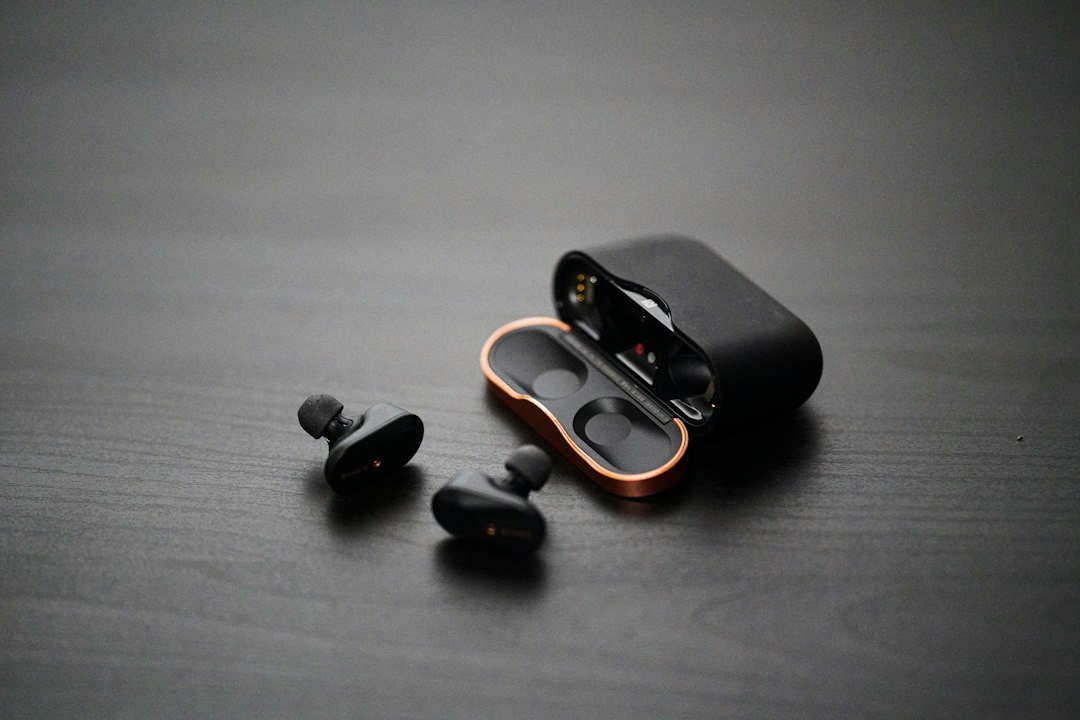
The rest of the sheet is everyday, which is the compliment. Bluetooth 6.0, dual-mode, with the usual frequency-hopping language about staying connected when a pocket and a jacket get in the way. IPX4, which means sweat and a light rain, not a swim and not a downpour you would trust with a phone. Dual microphones with an environmental-noise algorithm for calls. An app for EQ. Up to 8.5 hours in the buds and up to 30 hours with the case, USB-C, with the standard caveat that volume and codec eat that number. There is no active noise cancellation, because there is nothing to cancel against. Anyone selling you ANC on an open hook is selling a button that turns the volume down.
The hook is the product, not the driver
I have watched more people return open-ear pairs for fit than for sound. The canal is a standardized hole. The top of an ear is not. A hook that fits my ear will pinch a smaller one, and driver size will not fix a bud you reseat at every red light.
That is why the titanium wire matters more than the leakage percentage. Memory metal is how a fifty-dollar hook pretends to be fitted. It will not replace the adjustable arms on a mid-tier pair, and it will not replace a clip that never touches the top of the ear at all. It does mean 1MORE understood the failure mode. Cheap plastic hooks from two years ago felt like a coat hanger. This one is at least aimed at the right problem.
If you already know your ears hate hooks, do not talk yourself into the S10s because the price is friendly. Look at a clip. Bose Ultra Open Earbuds sit on the outside of the ear with a little cuff and have been the pair I hand to people who describe every hook as “almost, but my ear is weird.” You pay for that cuff. You also pay for Bose’s tuning and for a case that does not feel like a toy. The S10s are the pair you buy to find out whether open-ear is your category. The Bose clips are the pair you buy after you already know.
There is a cheaper clip experiment too. Soundcore’s AeroClip is the one I would try before spending Bose money, especially if the only thing you hate about hooks is the wire over the ear. Clips have their own failure: glasses. If you wear frames all day, a clip and a temple arm fight for the same real estate. Hooks usually win that fight. The glasses problem is the same one I keep running into on sealed over-ears, and it is why I still send people to the QuietComfort refresh when the job is silence at a desk, not awareness on a sidewalk.
Battery is a case story, not an earbud story
Eight and a half hours on a charge is a full workday of podcasts if you are not blasting them. Thirty hours with the case is a week of commutes. Those are manufacturer ceilings. I have never seen an open-ear pair hit its printed number once Bluetooth, a windy call, and a bright EQ are all on at once. Budget a third off and you will not be surprised.
The more interesting number is the gap between the buds and the case. Open-ear pairs get forgotten in jacket pockets because they do not hurt, so you leave them in. That is how you discover, at 7:40 a.m., that the case was on the kitchen counter and the buds are at 11 percent. A short USB-C cable in the bag is the unglamorous fix. I keep a short Anker USB-C cable in the same pocket as the case for exactly this reason. The S10s charge like everything else made after 2023. They do not charge themselves.
The rest of the aisle did not vanish
A door price does not retire the pairs above it. It sorts them. After a week of reading the S10s sheet against the pairs already on my shelf, the map looks like this.
If you want the hook, but you want the arm to actually adjust, the Soundcore AeroFit 2 is still the pair I trust in the middle of the market. Mashable’s open-ear roundup this year singled it out for not falling apart the way a lot of budget hooks do once you leave the spec sheet and start walking. You pay more than the S10s. You get a fit that survives more ear shapes, and you get a brand that has been in this form factor long enough to have fixed the first generation’s mistakes.
If the hook is fine and you want the name that runners already trust, Shokz OpenFit 2 is the premium air-conduction hook. Shokz spent years owning bone conduction, then built a hook that uses a normal driver because a lot of people hated the bone-conduction timbre. The OpenFit 2 is what you buy when the S10s sound good enough and the fit is not. Historically that jump has been well over a hundred dollars. It is still the jump.

Bone conduction is a different tool, and I do not want it blurred into this launch. Shokz OpenRun Pro 2 leaves the ear canal completely clear and puts the transducer on the cheek. Runners who have to hear cars, and people who cannot stand anything resting near the canal, still live here. The sound is thinner. The awareness is better. If your sport is the product, start there, not with a music-first hook.
Two more shapes are worth knowing so you do not buy the S10s by accident. Sony LinkBuds Open use a ring driver and a donut fit that never seals. They are the pair for people who already live in Sony’s app and want the open-ear idea without a hook over the ear. Nothing Ear Open is the design-desk version of the same idea, and it is the one I mention when someone cares what the case looks like on a table. Neither is a fifty-dollar experiment. Both are better answers if you already know you hate hooks.
If you lose individual buds, the neckband path still exists. JBL Soundgear Sense hangs around the neck and aims the drivers at the ears. It looks dated. It also does not vanish into a couch, which on a warehouse shift is the feature.
Traffic does not care about your playlist
The reason I keep coming back to this category, even when the sound is a compromise, is a street. A sealed bud at a bike lane is a bet that nothing will enter your path from the side. I have made that bet. I do not make it anymore. Open-ear is the design that lets a tram bell, a dog, and a podcast occupy the same minute.

That is also why IPX4 matters more here than it does on a desk pair. These buds are going to meet sweat. They are not going to meet a pool, and 1MORE does not claim they will. If your run is a downpour sport, bone conduction with a higher water rating still wins. If your run is a dry park loop and a sidewalk, the S10s are in the right neighborhood.

Over-ears on a run look serious and solve nothing about traffic. They have real bass, and they are a liability the moment a car turns without a signal. If that is your current setup, the S10s are a downgrade in fidelity and an upgrade in not getting hit. Reasonable volume lasts until the chorus.

The park path is the kinder test. No traffic, a podcast that does not need sub-bass. This is where a fifty-dollar open-ear pair earns its keep, and where Bose money is optional. If your listening life is mostly this and a grocery run, stop climbing the ladder. Live with the hook for two weeks before you decide the category deserves a better fit.
Calls, leakage, and the claims I will not cosign
Dual-mic ENC is call processing, not noise cancellation for you. It tries to keep your voice intelligible to the person on the other end while a sidewalk happens around you. It does not make a windy corner sound like an office. Open-ear calls are better than they were in 2023 and still worse than a sealed bud with a decent mic array, because the mic is farther from your mouth and the world is louder in the mix. For a quick “I’m ten minutes out,” fine. For a client call on a platform, I still reach for something that seals, or for the wired pair I wrote about when Bose put a cable back in the box. That cable rebellion is the opposite bet from this one: isolation and a wire, instead of awareness and a hook.
Leakage is the social tax. At low volume, modern directional ports are polite. At the volume you will actually use on a bus, the person in the next seat gets a tinny preview of your podcast. The 89 percent lab figure does not change that lived experience, because the lab is not a bus. If privacy matters, sealed buds matter. If awareness matters more than privacy, accept the tax and keep the volume one notch under where your ego wants it.
Who should spend the money this week
Buy the S10s if you have never owned an open-ear pair, your ears hate a seal after an hour, and your listening is sidewalks, kitchens, and easy runs. You are paying for the category, not for the last word in tuning. That is a good trade at this price, and a bad trade if you already own an AeroFit or an OpenFit and you are hoping a cheaper hook will embarrass it. It will not.
Skip them if the job is a plane, a open office, or a late-night apartment where the neighbor’s television is the problem. That job is still a sealed headphone. The budget end of that job is the shootout I ran on ANC under a modest ceiling, and the specific pair I keep handing people who want Sony’s tuning without a flagship tax is the WH-CH720N. Different tool. Different ears. Do not let a launch week talk you out of silence if silence is what you came for.
Skip them, too, if what you actually need is a bud that translates a conversation. That is a software product wearing an earbud costume, and I already walked through why the farmers-market test embarrasses the demo reel. The translation piece is the one to read before you confuse “open” with “smart.”
For everyone else, the week of October 14 is the first time I have been able to say: try the category without financing it. The S10s listing is the experiment. The Bose clip, the Shokz hook, the AeroFit, and the OpenRun are the answers you graduate to once you know which failure you cannot live with. Fit, timbre, or traffic. Pick the failure first. The price will make more sense after that than it does in a spec table.