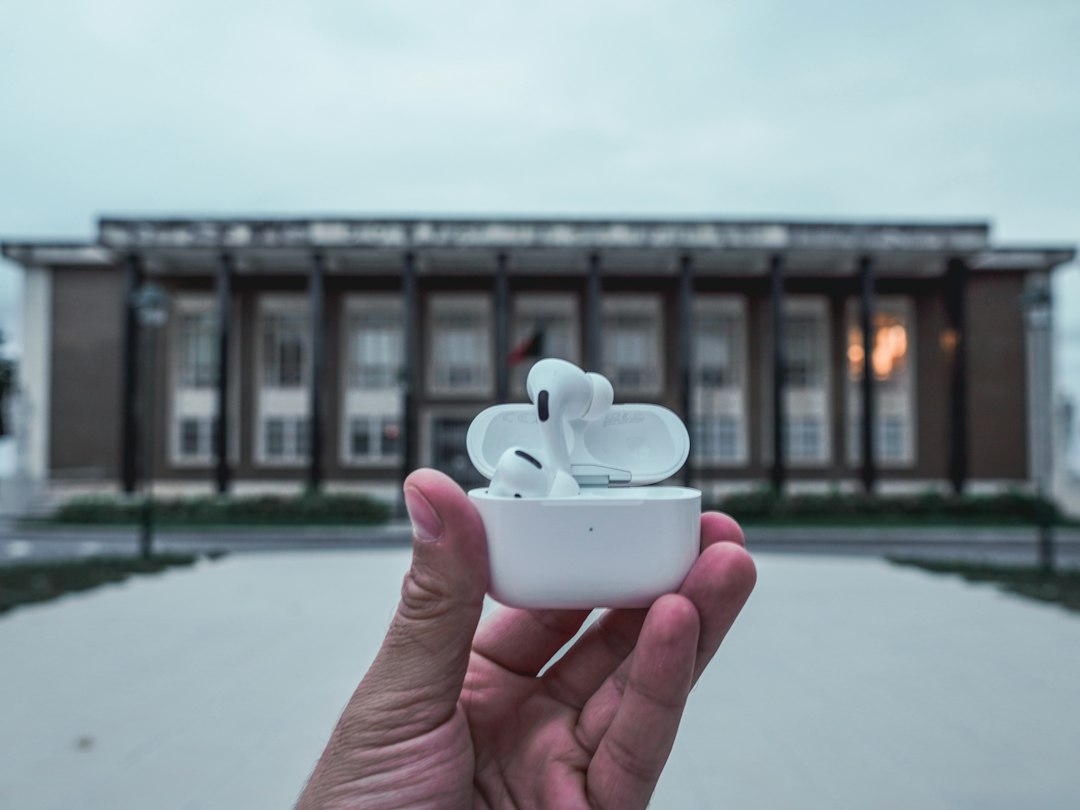
Every AI translation earbud demo you have ever watched was filmed in a room I want to live in. Treated walls. A lavalier mic inches from the speaker. Two polite people trading sentences like they are reading from a script, because usually they are. The latency counter at the bottom of the screen ticks along at a sedate pace, and everyone smiles at the end.
Then you land in Lisbon, and the woman at the market stall is telling you the cheese is priced per wheel, not per slice, over the roar of a blender two meters away, and your four-hundred-dollar interpreter earbuds have absolutely no idea what is happening. I have spent the better part of two decades reviewing gadgets, and translation hardware is the single most demo-friendly, real-world-hostile product category I test. So this fall, my team and I stopped being polite about it. We built a test that treats these things the way travel actually treats them.
Start With the Free Baseline
Before you spend anything, understand what zero dollars buys now, because it has quietly become a lot. Google opened live translation to basically any earbud paired to an Android phone late last year. Samsung’s Galaxy AI interpreter works through the Buds3 line, including the budget-friendly Buds3 FE at $149, and Apple’s version runs on the AirPods Pro line — the $249 AirPods Pro 3 translate face-to-face conversation when paired with an iPhone 15 Pro or newer on iOS 26. The catch is ecosystem lock-in and a phone that has to stay awake, paired, and in hand the whole time.
That baseline matters because it is the bar. A dedicated translation gadget has to beat a free app by enough to justify its existence, and that bar moved dramatically in the last eighteen months. I wrote last summer about how earbuds quietly became the most interesting AI hardware of 2026 — translation is the sharpest edge of that story, and it is also where the marketing outruns the machinery most often.
How We Ran the Counter Test
The methodology was simple and slightly humiliating to conduct. Three scenarios, repeated across two weeks: a farmers market stall at Saturday rush, a pharmacy counter with plexiglass and a queue behind us, and taxi rides with the window down. My teammates played the vendor side in Portuguese, French, and Spanish, with two deliberately cruel twists — regional accents, and prices spoken the way locals actually say them, digits mushed together, sometimes as words.
We timed four things. Cold-start latency, meaning the seconds between the other person finishing a sentence and translation hitting the ear. Number accuracy, because a mistranslated price is not an inconvenience, it is a small financial incident. Accent tolerance, from broadcast-standard to the kind of Scottish English that defeats native speakers. And recovery, meaning what happens after a miss — does the device let you re-ask, or does it confidently barrel ahead with the wrong sentence? Every earbud on the market passes the first two in a quiet room. The last two are where return rates are made.

Timekettle W4 Pro: The Interpreter You Bring to Meetings
The Timekettle W4 Pro is the one I hand to people who translate for a living — import managers, consultants, anyone whose calendar is a grid of time zones. At $449 it is the most expensive option here, and in our counter test it earned it: dual mics per bud that actually reject blender noise, bidirectional translation across 50-plus languages, and modes for calls, video, and face-to-face where you hand one bud across the table like a diplomatic ritual.

At a cafe table with moderate chatter, it was the closest thing to a human interpreter we tested. Follow-up questions survived. Numbers came through as digits most of the time. Where it wobbled: open-air wind killed pickup on one bud, and the one-bud-each social dance takes explaining the first time. The newer, cheaper W4 Plus gets you most of the same modes for less if the Pro price stings — but check which languages you actually need offline before choosing, because that is where the tiers differ.
Vasco E1: Translation That Survives Airplane Mode
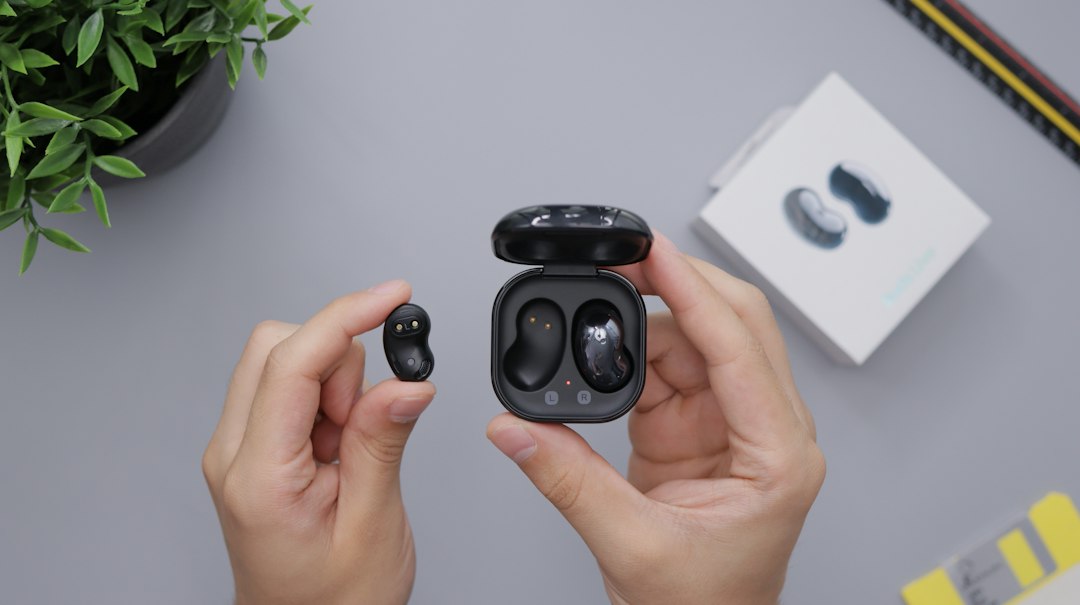
The Vasco E1 earbuds take the opposite bet from everyone else: the offline-first one. The core languages live on the device, which means the moment your phone hits airplane mode over the Atlantic, translation keeps working — no hotel Wi-Fi roulette, no roaming bill anxiety.
If you have read my piece about why hotel Wi-Fi is out to get you, you already know how often connectivity is the thing that quietly ruins travel tech.
In the market test, the E1’s touch-free design was the surprise winner — it detects the conversation and translates without poking a screen between every exchange, and the single-bud swap is more hygienic than passing a wet earbud to a stranger. Accuracy landed a step behind the W4 Pro on accented French, and latency stretched about a second longer under crowd noise. For rough travel, though, nothing else here shrugs off dead zones as well. Vasco also sells a bundle pairing the E1 with their V4 handheld, which includes lifetime connectivity in nearly 200 countries — overkill for a city break, genuinely useful for a month in Vietnam.
The Budget Tier and the Fifty-Dollar Question
Below the big names sits a shelf of $40–70 translator earbuds, the ANFIER class among them, and I want to be fair to them because the value math is tempting. My verdict after the counter test: they are fine for scripted tourist transactions — ordering, paying, asking for the museum — and shaky the moment a conversation goes off-menu. Noise rejection is where the money goes on premium buds, and it shows. Budget pairs also lean hard on their phone apps, so “offline” sometimes means offline for a handful of major languages only. Check that list against your itinerary before you believe the box.

Back in July I noted that the ANFIER M3 and Timekettle X1 were the first translation pairs that felt seamless for casual use. That still holds. What the budget tier does not survive is the pharmacy test — accents plus a queue plus a technical vocabulary. If your trips are short and your patience long, start cheap with a general AI translation earbuds search and upgrade only if you feel the lag. The lag, you will feel.
Why a Screen Still Beats Earbuds Sometimes
Here is the twist nobody’s demo shows: the best translator for half your real travel moments has no earbuds in it at all. The Pocketalk S2 Plus is a dedicated handheld with a screen the other person can read, 90-plus languages, and five years of global LTE data baked into the price — no SIM juggling, no subscriptions quietly stacking. Menus, street signs, pharmacy labels: point the camera, get an overlay translation. A waiter can read your screen from a polite distance and tap what he actually meant, which no earbud arrangement allows.

The older Pocketalk Plus does the same camera trick with an even larger display, and its HIPAA compliance is why you see them clipped to scrubs in hospitals. The subscription math is the quiet differentiator in this whole category: voice-translation apps run roughly $40 a year once trials end, earbud makers increasingly gate their best models behind tiers, and a device with data included can quietly win the two-year cost race. Do that arithmetic before you buy anything, not after.
The Earbuds Already in Your Pocket
For a lot of readers, the honest recommendation is the earbuds you already own. If you carry an iPhone 15 Pro or newer, AirPods live translation is genuinely good for the first fifteen minutes of any encounter — which, statistically, is most encounters. If you run a recent Samsung phone, the Galaxy AI interpreter flows through the Buds3 family and translates phone calls mid-ring, which saved a hotel reservation dispute this spring. In airports especially, where announcements mangle place names six ways, the phone-plus-buds combo held its own against hardware costing twice as much.

The limit is architecture. Phone-based translation is a one-pipe system: one mic array, one radio, one battery, and your messages competing with maps and boarding passes for attention. Dedicated gear splits those jobs across hardware built for nothing else. That is the entire premium you are paying for, and now you know precisely what it buys.
Where Every Single One of Them Fails
Some failures were universal in our two weeks, and you deserve to know them before checkout. Numbers spoken as words — “fifteen fifty” — tripped every device at least once; when money matters, pull up the calculator and type digits, universally understood since the abacus. Heavy regional accents compressed every model’s accuracy, some by a little, the budget tier by a lot. Store background music with vocals poisoned voice pickup on anything without serious noise rejection. And battery: translation modes burn earbuds at two to three times music drain, so a travel day can empty the case before dinner — one reason my power bank shootout knowledge gets packed on every trip now, and why I top up with an Anker Prime brick in the daypack.
Two habits fix most of it. Download your language packs before you leave home, then test them in airplane mode in your kitchen — thirty seconds, zero data, and you will know your offline reality before Lisbon does. And phrase questions to avoid yes-or-no answers, because translation engines improvise best when given a full sentence to grab onto.
The Right Tool for the Right Trip
Strip away the spec sheets and the decision sorts by life, not by leaderboard. Meetings and work travel: the W4 Pro is the professional tool, full stop. Off-grid or connectivity-hostile itineraries: the Vasco E1’s offline-first design wins even though it gives up a step of polish. Menus, signs, and anything the other person needs to read: a screen — the Pocketalk S2 Plus — does things no earbud can. Short tourist trips on a phone you already carry: spend almost nothing and let the ecosystem do the work.
The through-line is the one I keep relearning after twenty-five years of this job: the demo is a marketing format, not a usage manual. Translation hardware earns its price at the moment things get loud, fast, and slightly wrong. Test for that moment, buy for that moment, and everything else is a quiet room.