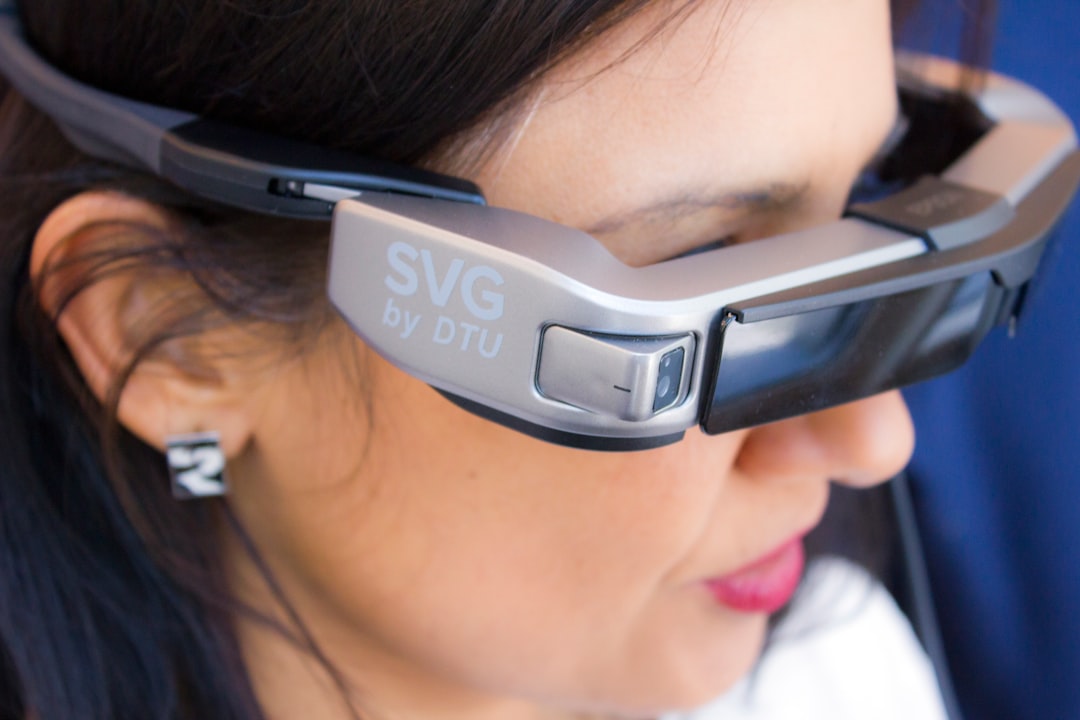
I’ve been testing smart glasses since the original Google Glass made everyone nervous in 2013. Back then, the idea of a camera on your face felt like a dystopian episode of Black Mirror waiting to happen. The hardware was clunky, the battery died before lunch, and the social stigma was real enough that I stopped wearing them in public after a bartender asked me to take them off or leave.
Thirteen years later, the category has quietly become the most interesting corner of consumer tech. Not because someone finally cracked augmented reality — though we’re getting closer — but because three completely different philosophies about what “smart glasses” should be have matured at the same time. And after spending the last six weeks living with the major 2026 releases, I can tell you that the gap between the best and the merely interesting is wider than it looks.
The Three Philosophies: Cameras, Displays, and Everything In Between
Before you spend a dime, you need to understand what you’re actually buying. The smart glasses market in 2026 has split into three distinct camps, and they serve fundamentally different needs.
The first camp is what I call the AI camera glasses — devices like the new Meta Ray-Ban Gen 2 and the 4K AI recording glasses from smaller brands. These look like normal eyewear, pack a camera and bone-conduction audio, and their primary job is capturing content and answering questions through a voice assistant. No display. No holograms. Just a solid pair of glasses that happens to have a 12-megapixel camera and an AI brain living inside the frame.
The second camp is the AR display glasses — devices like the RayNeo Air 4 Pro and XREAL One Pro. These are essentially wearable monitors that project a virtual screen in front of your face. Think of them as a 200-inch TV that weighs 80 grams and fits in your jacket pocket. They’re not trying to be subtle everyday eyewear; they’re trying to replace your monitor, your TV, and your Nintendo Switch screen all at once.
The third camp hasn’t shipped yet, but it’s the one everyone in the industry is watching: true AR overlay glasses powered by Google’s Android XR platform, with Samsung, Warby Parker, and Gentle Monster all partnering on hardware slated for fall 2026. These promise the holy grail — navigation arrows painted on the sidewalk in front of you, live translation subtitles floating in your field of view, and Gemini AI integrated at the operating system level.
I’ve spent meaningful time with all three categories, and here’s the honest truth: each one is genuinely useful for a specific type of person, and none of them is ready to replace your phone.
Meta’s Big Bet: Dropping the Ray-Ban Name
When Meta announced three new models at the end of June — the Adventurer, the Fury, and the Kylie Jenner co-designed Meta Glasses — the headline wasn’t the hardware. It was the branding. For the first time, Meta is selling smart glasses under its own name without the Ray-Ban or Oakley logo on the temple.
The partnership with EssilorLuxottica hasn’t ended. The frames are still manufactured together. But Meta is clearly signaling that smart glasses are no longer a niche product category that needs the credibility of a heritage eyewear brand to sell. They’re ready to stand on their own, and the $299 starting price — a full $80 less than the equivalent Ray-Ban branded Gen 2 model — tells you Meta is serious about volume.
I’ve been wearing the Meta Ray-Ban Gen 2 (the last generation to carry the Ray-Ban name) since it launched, and the experience is remarkably polished for what it is. The 12MP ultra-wide camera captures point-of-view shots that actually look good — not Instagram-grade, but perfectly fine for quick memories where pulling out your phone would kill the moment. The open-ear audio is surprisingly usable for podcasts and calls in quiet environments, and the battery genuinely lasts a full day of moderate use.
What makes the Gen 2 special isn’t the hardware, though. It’s the AI. Meta’s assistant has gotten genuinely good at contextual awareness. I can look at a sign in another language and ask for a translation. I can ask it to remember where I parked. I can have it summarize a conversation I just had. These aren’t gimmicks — they’re the kinds of things that make you reach for the glasses instead of your phone.

The weak link? Four hours of continuous battery life if you’re using the camera and AI heavily. That’s where a magnetic charging dock becomes essential — I keep one on my desk and one on my nightstand, and it’s made the battery anxiety disappear. There are also portable charging cases available that hold roughly three full charges, which I’d recommend if you travel.
The Screen-on-Your-Face Revolution: RayNeo Air 4 Pro
Here’s where the story gets interesting for people who want something genuinely different. The RayNeo Air 4 Pro isn’t trying to be a pair of smart glasses. It’s trying to be the only screen you need.
That sounds like marketing nonsense until you actually put them on. The Air 4 Pro projects a 201-inch virtual display at a 6-meter viewing distance, with HDR10 certification and a 120Hz refresh rate. In plain English: it looks like you’re sitting in a movie theater, except the movie theater is floating in front of your face and you’re wearing it like sunglasses.
I tested it across three scenarios that matter to me: working from a coffee shop, watching movies on a flight, and gaming on my Steam Deck. The coffee shop test was the most surprising. I connected the glasses to my phone via USB-C, opened a Bluetooth keyboard, and had a private, 201-inch workspace that nobody around me could see. No more squinting at a laptop screen in a noisy café. No more hunching over. Just lean back, type, and the screen follows your head.
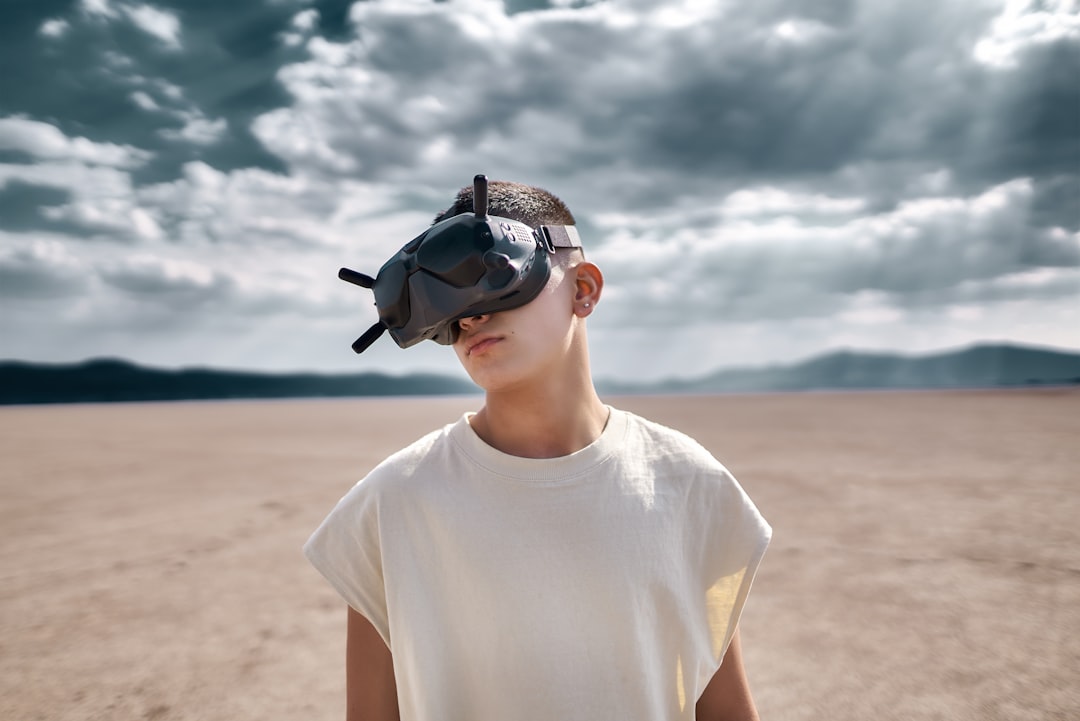
The flight test sealed it. I watched a two-hour movie on a cross-country flight and the glasses didn’t cut to a smaller screen when the cabin lights came on — the HDR brightness (rated at 1,200 nits on the Pro model) is more than enough to punch through ambient light. The Bang & Olufsen tuned audio won’t replace a good pair of earbuds, but for a quick movie it’s completely fine and means one less thing to charge.
If budget is a concern, the previous-generation RayNeo Air 3s Pro remains available at a significant discount and delivers about 85% of the experience. The HDR10 and B&O audio are the main upgrades on the 4 Pro, along with a noticeably brighter panel. The Air 3s (non-Pro) is even cheaper and still a solid entry point if you just want to test the concept.
XREAL One Pro: The Enthusiast’s Choice
If the RayNeo is the consumer-friendly option, the XREAL One Pro is the one I’d recommend to my fellow hardware nerds. It has a slightly smaller virtual display at 171 inches, but the 57-degree field of view is wider than anything else in this price range, giving the screen a more immersive feel despite the smaller nominal size.
The standout feature is the X1 chip’s native 3 Degrees of Freedom tracking. This means the virtual screen stays locked in physical space — when you turn your head, the screen stays where it is rather than moving with you. It sounds minor until you use a pair without it, and suddenly the screen feels like it’s pasted to your eyeballs instead of existing in the world.
I’ve been running the XREAL One Pro alongside my main AI workstation setup as a secondary reference monitor, and it’s genuinely changed how I work when I need to step away from my desk. Plug into a laptop, and you have a private second monitor anywhere. The real 3D support — meaning actual stereoscopic depth, not faux 3D — is impressive for gaming, though content support remains spotty.

The build quality on the XREAL is a step above the RayNeo. The hinges feel more robust, the included nose pads offer a better range of fit adjustments, and the cable is braided rather than rubberized. These are the details that matter after six months of daily use, and XREAL has clearly been listening to their enthusiast community.
The Prescription Lens Question
If you wear prescription glasses, the smart glasses market requires some homework. The Meta camera glasses support prescription lenses through EssilorLuxottica’s network — you upload your prescription and they send you custom-cut lenses that snap into the frame. It’s seamless but adds roughly $100 to $150 to the total cost.
The AR display glasses are trickier. Because they don’t sit directly in your line of sight as corrective lenses, you can usually wear contacts underneath them. But if contacts aren’t an option, both RayNeo and XREAL offer prescription lens inserts that attach magnetically behind the main optics. They work, but they add weight and slightly reduce the field of view.
For blue light filtering — important if you’re staring at virtual displays for hours — I’d recommend pairing any of these with a dedicated pair of blue light blocking glasses for your regular screen time. Your eyes will thank you, especially during late-night gaming sessions on the XREAL.

Google’s Android XR: The One I’m Waiting For
Everything I’ve tested so far is a building block toward something bigger. At Google I/O 2026, the company announced Android XR with two tiers: audio-only glasses (similar to the Meta camera glasses but focused on assistant features) and full display glasses with genuine AR overlay capability. Design partners include Samsung, Warby Parker, and Gentle Monster — meaning the hardware will actually look like something you’d want to wear.
The promise is significant. Gemini AI integrated at the OS level means you won’t be limited to a single assistant ecosystem. Live translation overlays mean you could read a menu in Tokyo and see English floating over the actual text. Navigation could paint directional arrows on the sidewalk. And because it’s Android, third-party developers get an SDK — which is the piece that’s been missing from every closed system so far.
XREAL has already announced their AURA glasses built on Android XR, featuring a 70-degree optical see-through display with Gemini integration, slated for fall 2026. If the execution matches the promise, this is the category-defining moment.
But I’ve been in tech long enough to know that “coming this fall” is a flexible concept. I’ll believe the AR overlay works smoothly in real sunlight when I’m wearing them on a trail run and not a moment sooner.
Which Camp Should You Join?
After two months of testing, here’s my honest breakdown for different types of buyers.
If you create content — vlogging, photography, social media — the Meta camera glasses are the clear winner. The hands-free capture quality, combined with AI-assisted editing through Meta’s app, creates a workflow that nothing else matches. Pair them with a charging dock and you’re set for daily use.
If you travel or work remotely, the RayNeo Air 4 Pro delivers an experience that genuinely changes how you use screens on the go. It’s the single biggest quality-of-life upgrade I’ve made to my travel kit this year, and I wrote about it as one of the five launches that actually fixed real problems this summer.
If you’re a hardware enthusiast who wants the best display technology available today, the XREAL One Pro with its wider FOV and 3DoF tracking is the more rewarding long-term companion. The image quality edge is noticeable if you’re coming from cheaper display glasses.
If you’re budget-conscious but still want to try the category, the RayNeo Air 3s or a previous-generation Meta model gives you about 75% of the experience at roughly half the cost. Smart glasses are evolving fast enough that I wouldn’t recommend spending premium money unless you know you’ll use them daily.
And if you want true AR overlays — the science fiction experience where digital information is painted onto the real world — wait for Android XR. The XREAL AURA, the Samsung/Google partnership, and whatever Warby Parker brings to the table are all landing within months. This is the category inflection point, and buying closed-ecosystem hardware right before an open platform launches is a recipe for buyer’s remorse.
The Bottom Line After Six Weeks
Smart glasses in 2026 are where smartphones were in 2008 — clearly the future, not quite ready for everyone, but already indispensable for early adopters who’ve found their specific use case. The Meta camera glasses have solved the content capture problem. The RayNeo and XREAL display glasses have solved the portable screen problem. Android XR is about to attempt the hardest trick of all: making the digital world feel like it belongs in the physical one.
I don’t say this often, but this is a category worth paying attention to. Not because the current hardware is perfect — battery life remains the universal weak point, none of the display glasses work well with prescription lenses without compromise, and the software ecosystems are still fragmented. But the trajectory is unmistakable. Two years ago, smart glasses were a novelty. Today, they’re tools I reach for daily. By this time next year, they may be the most competitive category in consumer tech.
For now, pick the camp that matches your life, grab a charging accessory, and enjoy being early to something that actually feels like the future. Just don’t blame me when you can’t go back to a single monitor.