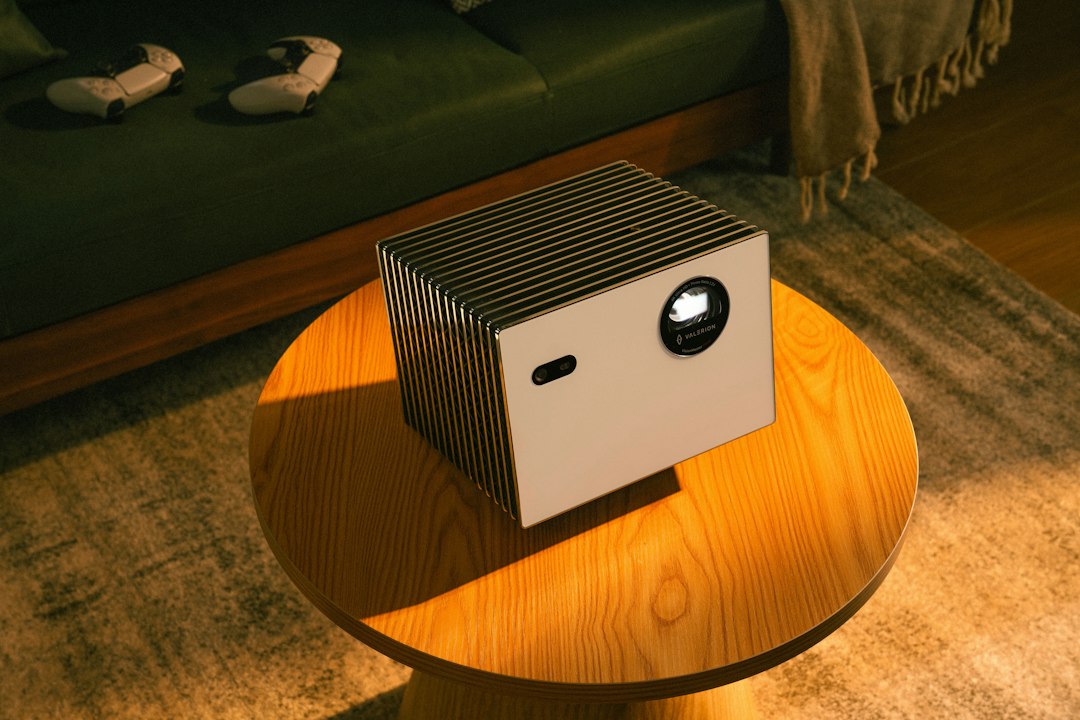
IFA 2026 will be remembered for the robots. Every hall had a humanoid, a quadruped, or a wheeled butler promising to fold your laundry by 2031 — and behind almost every one of them stood a nervous engineer with a PlayStation controller. But the product I actually brought home from Berlin wasn’t a robot at all. It was a soda can. Samsung’s Freestyle+, the $1,199 cylinder the company swears is a projector, has been living on a shelf in my living room for two months now. It’s the smartest dumb display I’ve ever tested, it made my team fight over movie night hosting duties, and I still don’t think it’s the can most people should buy. Let me explain.
The Can That Refused to Die
When the original Freestyle arrived in 2022, I’ll admit I dismissed it. A 1080p projector with no battery, no stand, and a brightness spec that translated to roughly a dim lamp — for $900 — read like a design object for people with more money than walls. Samsung clearly paid attention, because the Freestyle+ that launched this past July is the third pass at the idea, and the first one that feels like a television that happens to be shaped like a beer can.
The pitch is simple: 1080p, HDR10+, up to a 100-inch picture, Tizen smart TV software built in, 360-degree sound, and a new AI setup suite — all in a 1.7-pound cylinder you can point at any wall in the house. Samsung sells the Freestyle+ for $1,199, which puts it in awkward territory: more than most 65-inch 4K TVs, less than the premium lifestyle projectors it wants to sit beside. The category has clearly arrived, though. Walking the IFA floor, nearly every major brand had some version of a canister projector, and New Atlas wasn’t exaggerating when it called these things mainstream. The Freestyle+ is just the most confident of the bunch.
Setup That Basically Does Itself
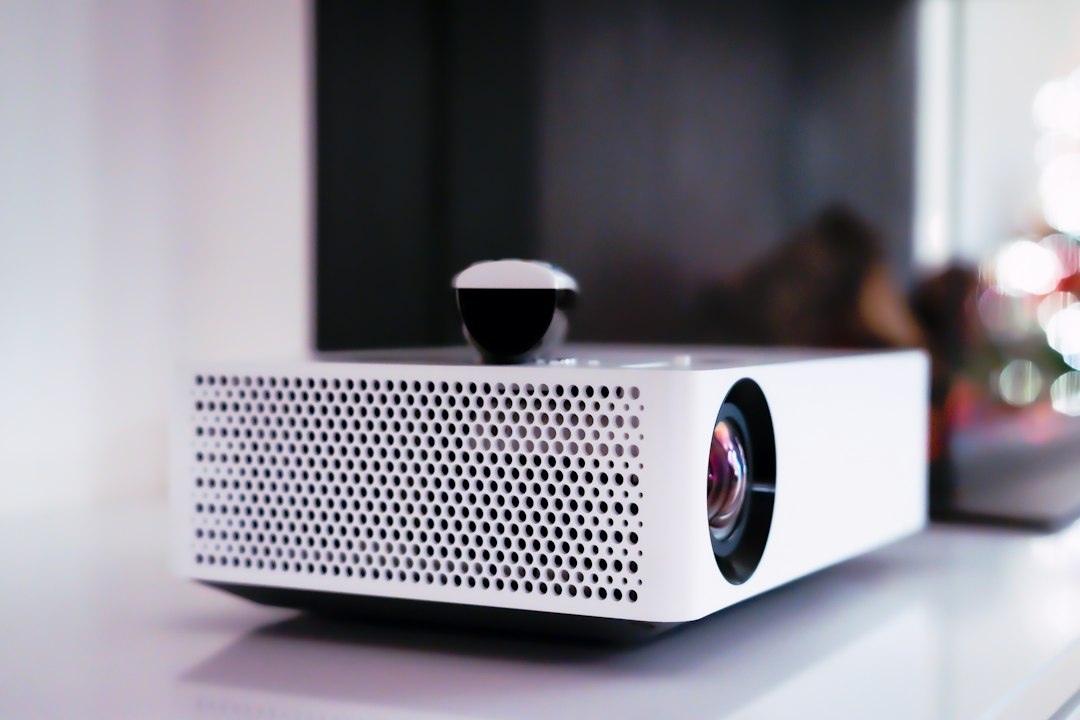
Here’s where the two months of living with it paid off, and where the “AI” branding earns at least some of its keep. Traditional projectors demand a ritual: level the stand, fix the keystone, refocus, curse, repeat. The Freestyle+ measures the distance to your wall with an ultrasonic motor the moment you swivel it, snaps focus in about a second, and corrects its geometry automatically. Point it at the wall. That’s the whole setup.
The new OptiScreen tricks go further than keystone, too. It maps the texture and color of whatever you’re projecting on and compensates — my tester with the aggressively patterned wallpaper got a shockingly watchable image without a screen. One of my team ran it against a beige textured wall, a brick accent wall, and a garage door, and it held a rectangle on all three. That is a genuine party trick, and after years of reviewing projectors that get bent out of shape by a bookshelf, I respect it. The built-in Tizen software means no dangling streaming stick — Netflix, YouTube, and Samsung’s free TV Plus service with its 2,700-plus channels are all on board the moment it joins your Wi-Fi.
430 Lumens, Honestly Measured
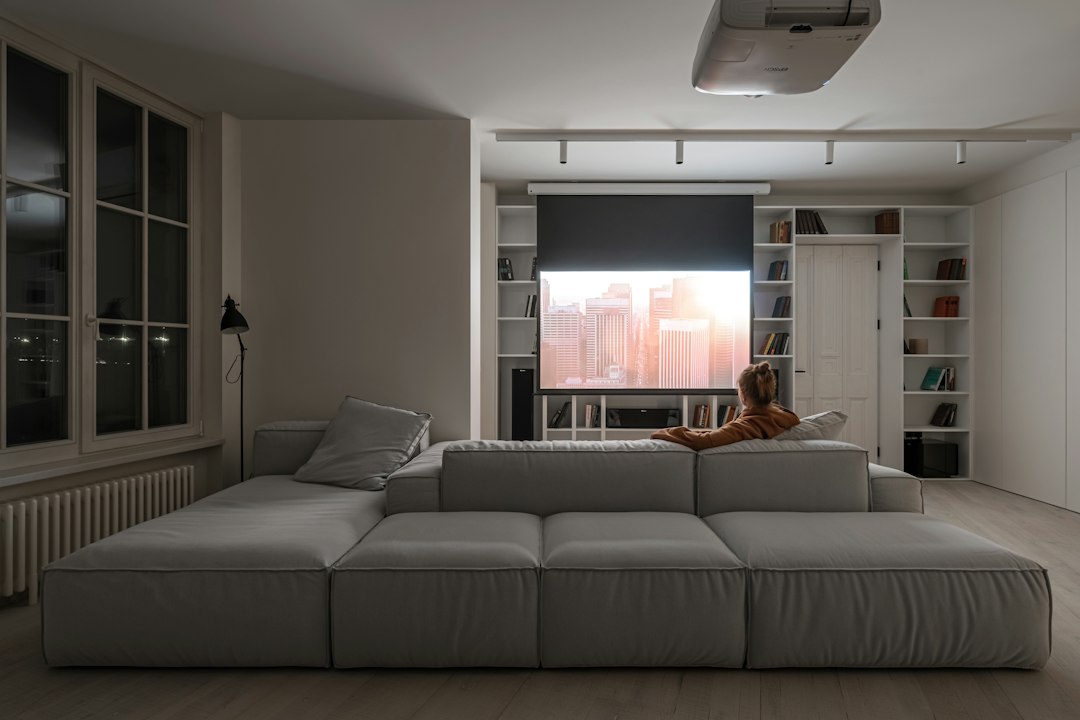
Now the honesty portion of this article. Samsung rates the Freestyle+ at 430 ISO lumens. My rule of thumb after testing budget projectors for years: about 300 real lumens is the tipping point between “acceptable in a dark room” and “genuinely good.” The original Freestyle claimed 550 lumens and measured under 250 in independent testing, so I dragged out the meter expecting disappointment. I didn’t get it. The Freestyle+ holds its spec closely enough that dark-room viewing is genuinely pleasant at 80 to 100 inches.
A surprise: it’s a legitimately fun gaming can. Samsung’s Gaming Hub streams Xbox titles from the cloud, and on my 300 Mbps connection the added latency was fine for anything that isn’t a fighting game. My tester logged a full weekend of Forza on the thing projected at 85 inches and reported no motion smear worth complaining about. Just keep the room dark and the image under 100 inches, and it behaves like a very large, very portable television.

Sound deserves a paragraph, because it’s half of why the can works. The 360-degree speaker with dual passive woofers fills a room better than any projector audio I’ve tested — better than several soundbars I’ve paid good money to forget. Pair it with a Samsung soundbar via Q-Symphony and the two sync into something that genuinely embarrasses the $200 Bluetooth speaker most people would otherwise drag into the yard. That speaker is doing real work selling the $1,199 price.
But daylight is still daylight. This is a 1080p lamp fighting the sun, and the sun wins every time. If your viewing happens before sunset with the blinds open, a television remains the right tool — my take on Roku’s new $999 OLED covers that end of the street. What the Freestyle+ does is own the hours a TV can’t touch: the after-dark backyard movie, the bedroom ceiling, the vacation rental with the 32-inch tube TV bolted to the dresser. And a cheap screen matters more than you’d think — even a $30 foldable 120-inch screen buys you visible contrast over a textured wall once ambient light creeps in.
The Cheaper Cans Worth Your Money
Here’s my confession after two months: the Freestyle+ is the best can, and I still recommended other cans to three different friends. The reason is price gravity. Samsung’s cylinder carries a premium for polish — the instant focus, the wallpaper mapping, the Tizen polish — and most people would rather spend that $600 difference on a soundbar and a weekend of actual movie nights.
The can I keep recommending is Anker’s Nebula Capsule 3, the Netflix-certified soda can that nails the essentials at roughly half the price. It’s not as bright and its auto-setup is more “eventually” than “instant,” but it’s built like a battery-powered smart TV, and Anker’s software support has been the most reliable in this category. XGIMI’s MoGo 4 is the other one on my bench constantly — the 360-degree adjustable stand built into its body is the accessory Samsung charges extra for, and the PowerBase bundle version adds a charging dock that turns it into a true cordless cinema.
If you just want the Samsung experience and can live with last year’s model, the renewed second-gen Freestyle has been floating around under $600 and keeps the Tizen software, the Gaming Hub, and most of the setup magic. That’s the sleeper pick for Samsung households — especially if a Q-Symphony-compatible soundbar is already in the rack.

When 4K in a Can Makes Sense
The counterargument to everything above is resolution. All three cans I just praised are 1080p, and once you project past 90 inches in a dark room, you start noticing. XGIMI’s Elfin Flip squeezes a 4K image and a flipping stand into the same canister silhouette for less than the Freestyle+, and it’s the one my cinephile tester reaches for when the choice is hers. The trade is setup intelligence — the Flip is quick, but it doesn’t read your wallpaper or refocus mid-move — and a slightly more conventional streaming experience. For pure image quality per dollar in this shape, though, it’s the current value king.

The Accessories That Decide Whether You Keep It
Every lifestyle projector lives or dies on its accessories, and the Freestyle+ is sold à la carte in a way the box art doesn’t make obvious. The biggest omission: the battery. Out of the box, the can needs wall power, which somewhat defeats “take it anywhere.” Samsung’s Freestyle battery base snaps on underneath and buys you roughly three hours of cordless movie — enough for a feature film with trailers to spare. If you already own a power station from a backyard project like mine, the Freestyle+ will happily sip from that instead, which is how my deck stays cord-free.
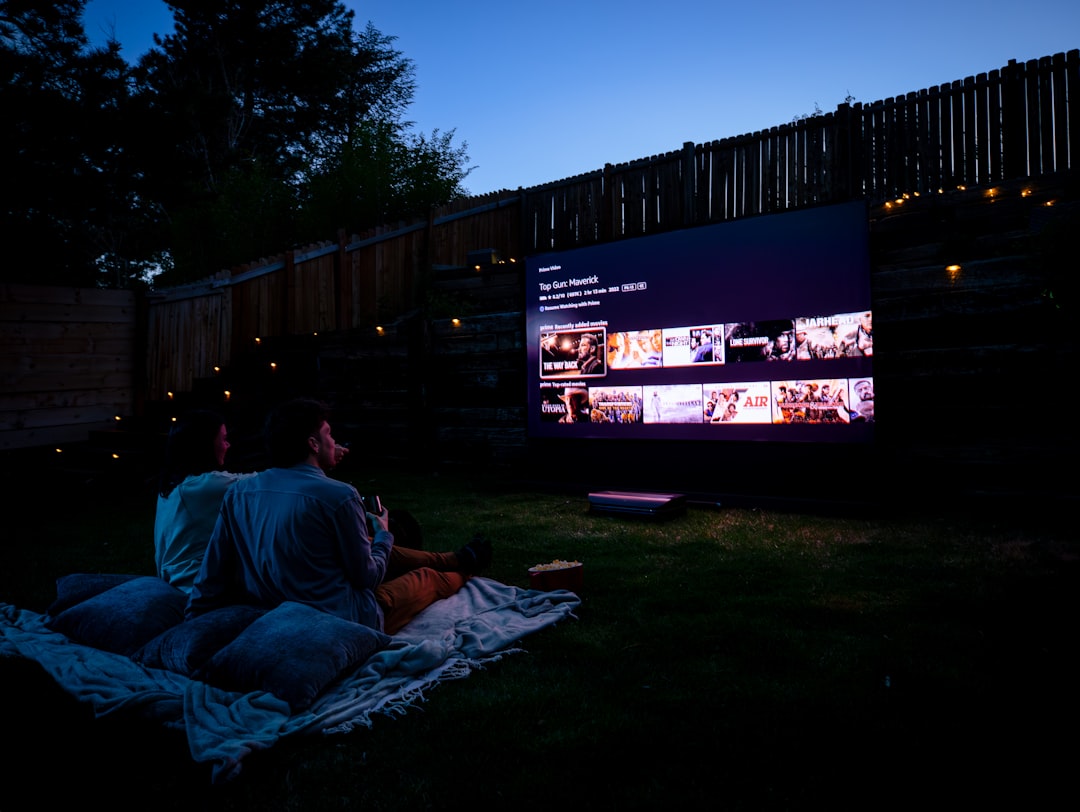
For outdoor screenings, a screen with legs beats a sheet and a prayer. The 120-inch pop-up screen with stand my team uses assembles in about four minutes and survives a light breeze. Indoors, skip the table stacks entirely — a proper adjustable tripod stand gets the lens to the right height and keeps keystone correction from eating your resolution. And if you’re stringing this into a bigger sports-watching rig, my cord-cutter playbook covers the streaming and antenna side of the equation.
Who the Freestyle+ Is Actually For
After two months, the verdict crystallized cleanly. Buy the Freestyle+ if you move your movie nights between rooms or houses, if you’re deep in the Samsung ecosystem with a soundbar to pair, or if you genuinely value pointing a cylinder at a wall and having a TV materialize in one second. The setup intelligence is real, the measured brightness finally matches the box, and the 360-degree speaker is better than any projector speaker has a right to be.
Skip it if you watch mostly in daylight — a TV wins that fight at any price — or if the goal is maximum image per dollar, in which case the Elfin Flip or the Capsule 3 will make you happier and leave budget for the accessories that actually complete the experience. The canister projector isn’t a gimmick anymore; IFA proved the category has legs. But the smart move in 2026 is buying the can that matches how you actually watch, not the most expensive one on the shelf. My wall has hosted all of them this summer, and the movie never cared which cylinder was throwing it.