
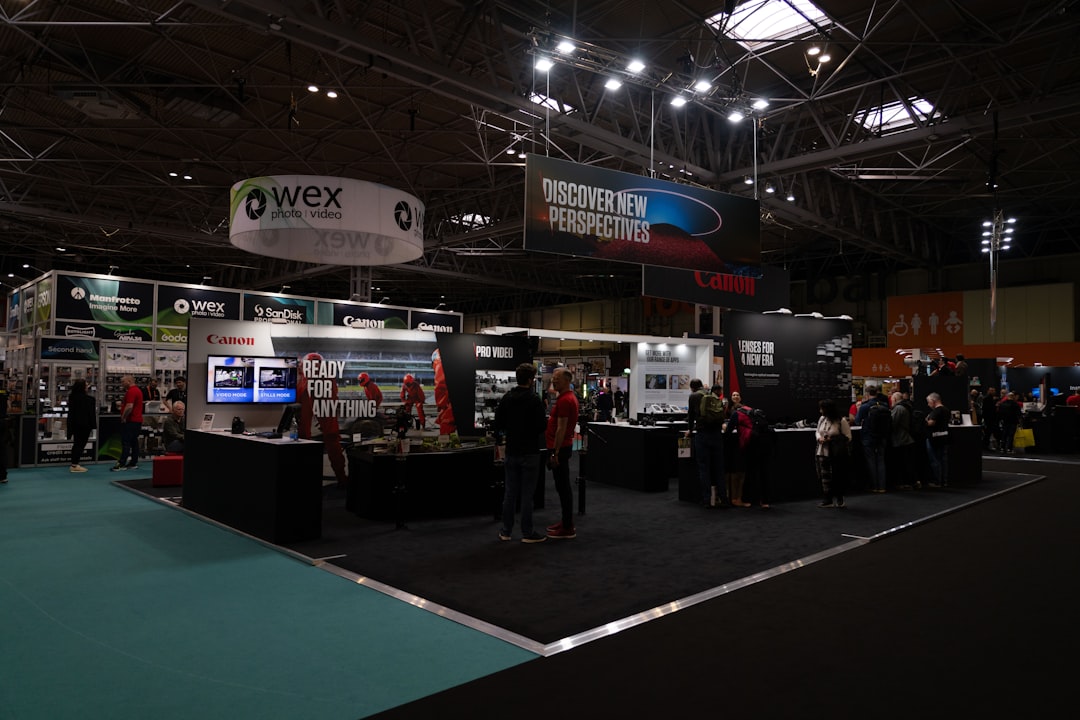
Computex 2026 wrapped up last week, and I’m still processing what I saw on the show floor. For the first time in years, the biggest story wasn’t about raw GPU frame rates or CPU clock speeds — it was about running AI models locally, on your own hardware, without ever touching a cloud API. The hardware on display in Taipei wasn’t theoretical. It’s shipping this summer, and it changes the calculus for anyone who’s been dabbling with local LLMs, image generation, or AI-powered workflows.
I’ve spent the last eighteen months building and testing local AI rigs of every shape and size. What struck me about Computex this year is how quickly the industry has moved from “maybe someday” to “here’s a box that does it right now, for less than you’d spend on a gaming laptop.” Let me walk you through the hardware that genuinely excited me — and a few things that left me skeptical.
The NVIDIA RTX Spark: Grace-Blackwell Comes to Laptops
The single most talked-about announcement was NVIDIA’s RTX Spark — a consumer superchip that packs a Grace ARM CPU with up to 20 cores alongside a Blackwell-generation GPU with 6,144 CUDA cores and up to 128GB of unified LPDDR5X memory. This is essentially the same architecture NVIDIA uses in its data-center Grace-Blackwell modules, shrunk into a form factor that fits inside a Windows laptop.
Why does unified memory matter so much for AI? When you run a large language model, the biggest bottleneck isn’t compute — it’s getting the model weights into the GPU fast enough. With traditional discrete GPUs, you’re limited to whatever VRAM is soldered onto the card (usually 8–24GB in consumer parts). Unified memory means the CPU and GPU share the same pool, so a 128GB configuration can load models that would normally require multiple expensive data-center GPUs. I’ve been running quantized models on my AMD Ryzen AI Max+ 395 review unit with a similar unified memory approach, and the experience is transformative — but NVIDIA’s CUDA ecosystem still has a significant software advantage, especially for researchers and developers working with PyTorch.
NVIDIA hasn’t confirmed pricing for the RTX Spark, but expect laptops featuring it to land in the $2,500–$4,000 range when they ship in late summer. If you’re shopping for NVIDIA-powered AI laptops, this is the chip to wait for.
Intel Panther Lake: 18A Process Meets AI
Intel’s Panther Lake is the first consumer chip built on the company’s 18A manufacturing process, and it was everywhere at Computex. This matters more than most people realize — Intel’s foundry business has been under intense pressure to demonstrate that its advanced nodes can compete with TSMC, and Panther Lake is the proof point.
From an AI perspective, Panther Lake’s dedicated NPU delivers over 50 TOPS of AI performance, which Intel pairs with a capable integrated GPU for another 40+ TOPS. That combined 90+ TOPS is enough to run 7B and 13B quantized models smoothly through frameworks like Ollama or llama.cpp, all while sipping power compared to a discrete GPU. I saw live demos running Mistral 7B at over 40 tokens per second on a Panther Lake laptop — that’s faster than many cloud APIs, with zero latency and complete privacy.
The practical upshot? If you’re in the market for a new productivity laptop this fall, Panther Lake means you get real AI inference capability as a baseline feature, not a premium add-on. Every mainstream laptop with this chip can run local models, summarize documents offline, and handle AI-enhanced creative tasks without a network connection.
Minisforum Goes All-In on AI Mini PCs
Minisforum announced four new AI-focused devices at Computex, and I spent more time at their booth than I care to admit. The M2 Pro and MS-03 mini PCs are the most interesting — both are designed from the ground up as local AI inference machines that sit on your desk silently while running models that would have required a loud, power-hungry workstation even a year ago.
The MS-03 updates the popular MS-01 with Intel Panther Lake processors and expanded connectivity options, including dual 2.5GbE and Thunderbolt 5. I’ve been running an always-on AI appliance built from a mini PC for months now, and the MS-03 addresses every complaint I had about the previous generation: more memory bandwidth, better sustained performance under load, and a fan profile that stays genuinely quiet even when you’re pushing the NPU hard.
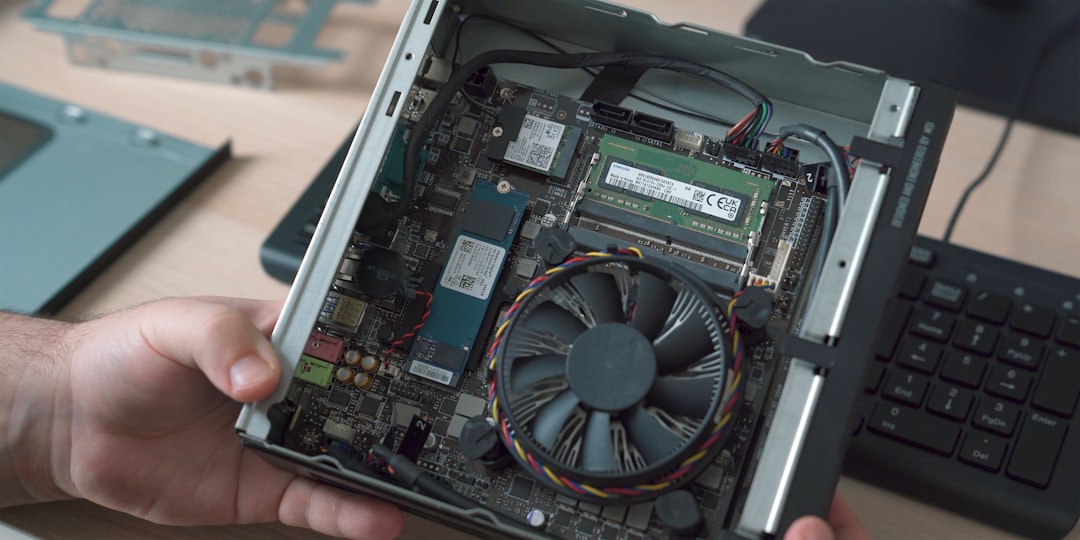
The M2 Pro takes a different approach, using AMD’s latest Ryzen AI silicon in a slightly larger form factor that allows for more robust cooling and dual-channel memory configurations. Minisforum claims it can sustain inference on 30B-parameter models for extended periods without thermal throttling — a claim I intend to test as soon as review units ship.
If you’re considering building a local AI workstation on a budget, these Minisforum machines are worth watching. Expected pricing is in the $600–$1,200 range depending on configuration, which is remarkable for machines that can genuinely replace cloud AI services for everyday tasks.
What About AMD’s Response?
AMD wasn’t idle at Computex either. The company showed updated Ryzen AI 400 series chips with up to 55 TOPS from the NPU alone, and their demos focused heavily on real-world productivity workflows — live translation, document summarization, and code assistance — running entirely locally. AMD has been quietly building out its ROCm software stack to better compete with NVIDIA’s CUDA ecosystem, and it shows. The gap isn’t closed yet, but it’s narrowing faster than I expected.
I’ve been living with AMD’s current-generation Ryzen AI Max (Strix Halo) for a full month now, and it remains my top recommendation for anyone who wants a single machine that handles both heavy creative work and local AI inference. The new Ryzen AI 400 series appears to extend that philosophy down into lower price points, which is exactly what the market needs.
For shoppers looking at AMD-powered laptops for AI workloads, the Ryzen AI 400 machines shipping this fall should offer compelling value, especially if you’re already invested in the AMD ecosystem.
The Software Side Is Catching Up
Hardware is only half the story. One of the most significant developments at Computex wasn’t a chip at all — it was Microsoft’s announcement of WSL 3 with near-native GPU and NPU passthrough. This means you can run Linux-based AI tools inside Windows with almost no performance penalty, accessing the full power of your GPU or NPU without the complexity of dual-booting or wrestling with Windows-native Python environments.
I’ve been testing WSL 3 builds for the past two weeks on my Snapdragon X2 Elite machine, and the experience is surprisingly polished. Ollama installed inside a WSL 3 Ubuntu distribution can target the NPU directly, running local inference without any API cost and without sending queries off the device. This removes what has been the single biggest friction point for non-developers who want to experiment with local AI — the software setup.
Combined with tools like LM Studio, which now offers one-click model downloads with automatic hardware detection, the barrier to entry for local AI has dropped from “weekend project for engineers” to “fifteen minutes and a reasonable laptop.” That’s a fundamental shift, and it’s one I’ve been waiting for since I first started building AI workstations for creative professionals.
Should You Upgrade Now or Wait?
This is the question I’m getting most often, and the honest answer is: it depends on what you’re running today. If you’re on a machine from 2023 or earlier with no NPU, and you’re interested in local AI, the Panther Lake and Ryzen AI 400 laptops shipping this fall represent a genuine generational leap. Wait for those.
If you already have a recent machine with a decent GPU — say, an RTX 4070 or better — you can run most useful models today with the right software setup. The new hardware will be faster and more power-efficient, but the difference is evolutionary rather than revolutionary for your use case. Consider upgrading your GPU or adding an AI accelerator instead of replacing the whole system.
For home-lab enthusiasts and tinkerers, the Minisforum AI mini PCs and similar machines from Beelink and Geekom offer an interesting middle path. You get dedicated AI hardware in a silent, low-power form factor that can run 24/7 as a household inference server — handling voice assistants, smart home automation, document processing, and personal AI tasks without any recurring cloud costs. A dedicated AI mini PC for your home network might be the most practical investment you can make right now.
The Bottom Line
Computex 2026 made one thing abundantly clear: local AI is no longer a niche hobby for hardware enthusiasts. Every major chip maker is building AI inference capability into their mainstream products, the software ecosystem is maturing rapidly, and the price-performance ratio has reached a point where running your own models makes financial sense compared to monthly cloud API subscriptions.
The NVIDIA RTX Spark brings data-center architecture to laptops, Intel’s Panther Lake makes AI a baseline feature in every new PC, AMD continues to push unified memory performance, and mini PC makers are building affordable dedicated inference machines. After twenty-five years of covering this industry, I can honestly say this is the most exciting hardware cycle I’ve seen since the original multi-core revolution. The hardware is ready. The software is catching up. And the best part? Your data stays on your machine, under your control.
If you’ve been on the fence about local AI, this fall is the time to jump in. Whether you choose a powerful AI laptop, a compact inference appliance, or an upgrade to your existing desktop with a dedicated AI accelerator, the hardware waiting for you is genuinely good — not just “good for the price” but actually, honestly good.

One thought on “Computex 2026 Changed Everything About Local AI Hardware — Here’s What Actually Matters”