I’ve been testing gadgets professionally for over 25 years, and if there’s one thing I’ve learned about health tech, it’s this: the number most people obsess over — total body weight — is the least interesting thing your body can tell you. I learned that lesson the hard way last spring, when I started training more seriously and watched the scale go up for three straight weeks while my jeans got looser. Without body composition data, I would’ve quit. With it, I kept going.
That experience sent me down a rabbit hole that resulted in seven smart scales sitting in my bathroom, hallway, and office over a 90-day period. My team helped me source units from every major brand — Withings, Wyze, RENPHO, Etekcity, GE, arboleaf — ranging from $22 budget picks to $150 premium models. What I found surprised me, frustrated me, and ultimately changed how I think about tracking health at home.
What Bioelectrical Impedance Actually Measures (And Where It Falls Apart)
Every smart scale on the market uses the same underlying technology: bioelectrical impedance analysis, or BIA. A tiny, imperceptible electrical current travels from electrodes under your feet through your legs and torso. Different tissues — muscle, fat, bone, water — resist that current at different rates, and the scale uses those resistance measurements to estimate your body composition.
Here’s the catch: BIA is an estimation built on an estimation. The scale measures electrical resistance, plugs that into a proprietary algorithm along with your height, age, and gender, and spits out a body fat percentage that can be off by 3-5% compared to a clinical DEXA scan. That doesn’t make it useless — far from it. But it means you should care about trends, not absolute numbers. If your scale says 22% body fat and a DEXA says 19%, that gap matters less than whether the scale consistently tracks your downward (or upward) trajectory over weeks and months.

The other thing nobody tells you: hydration throws everything off. Drink a glass of water, step on the scale, and your body fat reading might drop by 2%. Dehydrated from a morning workout? Your fat percentage will look artificially high. The solution is consistency — weigh in at the same time of day, ideally first thing in the morning, under the same conditions. My team and I standardized on 6:30 AM, before coffee, after the bathroom, every single day for 90 days.
The $22 Pick That Outperformed Scales Three Times Its Price
I’ll start with the one that genuinely shocked me. The RENPHO Elis 1 Smart Scale currently sits at around $22 on Amazon, and it tracks 13 metrics: weight, BMI, body fat, muscle mass, water percentage, bone mass, basal metabolism, visceral fat, and more. For less than the cost of a movie ticket and popcorn, you get Bluetooth syncing, Apple Health and Google Fit integration, and an app that doesn’t make you want to throw your phone across the room.
Is it the most accurate scale I tested? No. Its body fat readings consistently ran about 3% higher than the Withings Body Comp I used as my reference unit. But here’s what matters: it was consistently 3% higher. Day after day, week after week, that offset stayed stable. Which means if you step on the RENPHO on January 1st and it says 24%, and you step on it March 1st and it says 21%, you lost real body fat — even if the absolute number isn’t lab-accurate.
The Elis 1 uses four foot-pad electrodes (no handlebar), which limits its segmental analysis — it can’t tell you the difference between left and right leg muscle mass. But for the overwhelming majority of people who just want to track whether their fitness program is working, that’s a non-issue. This is the scale I’d buy my parents, and the one I’d recommend to anyone who’s curious about body composition but doesn’t want to make a serious investment.
The Mid-Range Workhorse Most People Should Actually Buy
If you can stretch to the $35-50 range, the conversation changes. The Wyze Scale X has been my daily driver for the past six weeks, and it hits a sweet spot that’s hard to beat. It tracks weight, body fat percentage, lean body mass, bone mass, water weight, heart rate (through a separate foot-pad measurement), and even has a mode for babies and pets — yes, really. You can weigh your cat on this thing, and honestly, I did.
The Wyze app is clean, fast, and syncs with Apple Health without any drama. It supports up to eight user profiles, which makes it viable for a household. And the scale itself runs on four AAA batteries — keep a pack handy, because they last about 4-6 months with daily use by two people.
Where the Wyze really separates itself from the RENPHO is in build quality and consistency. The tempered glass platform feels substantial, the readings are more stable from day to day, and the Bluetooth connection rarely drops. In my testing, the body fat readings sat within 1.5% of the Withings reference — tighter than any other sub-$50 scale I tested.
If you want the next step up in the Wyze ecosystem, the Wyze Scale Ultra adds Wi-Fi connectivity (so your data syncs even when your phone isn’t in Bluetooth range), a brighter LED display, and more advanced metrics including segmental fat analysis. At roughly $60-70, it’s the pick for anyone who wants a more premium experience without crossing into Withings territory.
The Premium Benchmark I Couldn’t Put Away
Then there’s the Withings Body Comp. At around $100-130 depending on the color, it’s the scale I kept going back to as my reference standard — and the one that ultimately earned a permanent spot in my bathroom even after the testing period ended.
Withings has been making smart scales longer than almost anyone in this space, and it shows. The Body Comp measures weight, body composition (fat mass, muscle mass, bone mass, water percentage), visceral fat index, basal metabolic rate, and even vascular age — an estimate of arterial stiffness that’s usually only available in a clinical setting. It connects via both Wi-Fi and Bluetooth, which means your data appears in the Withings Health Mate app automatically, no phone nearby required.
The app experience is what separates Withings from every other brand I tested. Health Mate presents your data in context — it shows trends, highlights anomalies, and connects with an enormous ecosystem that includes Apple Health, Google Fit, Samsung Health, Strava, and MyFitnessPal. If you’re already tracking workouts, sleep, or nutrition in any of those platforms, Withings slots in without friction.
The biggest knock against Withings is price. You can get 80% of the functionality for a third of the cost with the Wyze or RENPHO. But if you want the most accurate consumer-grade BIA readings, the best app experience, and a device that will receive firmware updates for years, this is the one.
The Two Wildcards Worth Knowing About
Two other scales deserve a mention here, each for different reasons.
The GE Smart Scale launched earlier this year and brings something unique to the table: 50+ body composition metrics including segmental analysis (left vs. right side breakdowns) typically only found on scales with handlebars. GE claims their algorithm was validated against DEXA in clinical studies, and in my testing, the body fat readings were the closest to the Withings — within 1% on most days. The app is functional but not as polished as Withings or Wyze. At around $50-60, it’s positioned between the mid-range and premium tiers.
The arboleaf Smart Scale is the other one that caught my attention. It matches the GE with 50+ metrics, includes a handlebar accessory for more accurate segmental readings (the same approach used in gym-grade equipment), and comes in at roughly $40. The handlebar is a big deal — it means the electrical current travels through your entire body rather than just your lower half, which significantly improves accuracy for upper-body composition estimates. If you strength train seriously, this is the budget pick I’d recommend.
Rounding out the field, the Etekcity Smart Scale remains a consistent Amazon best-seller at around $25-30. It’s FSA/HSA eligible, which is a nice bonus. And the RENPHO Smart Scale with TFT Handle Display is the upgraded version of the Elis 1 — it adds the handlebar for full-body readings and a color TFT screen, landing at about $35.
What 90 Days of Data Actually Taught Me
Here’s the part that surprised me most. After 90 days of stepping on these scales every morning and logging the data in a shared spreadsheet (my team insists on rigor), the single most valuable metric wasn’t body fat percentage. It wasn’t even muscle mass.

It was visceral fat — the fat stored around your organs, not under your skin. Visceral fat is the one that correlates with cardiovascular disease, type 2 diabetes, and metabolic syndrome. It’s the number your doctor actually cares about, and almost nobody tracks it at home because you can’t see it in the mirror. The Withings and GE both measure it, and watching mine drop from “elevated” to “normal” range over 12 weeks of consistent training and cleaner eating was more motivating than any aesthetic change.
The second most valuable insight was how much my weight fluctuated day to day — sometimes by 3-4 pounds — while my body composition trended steadily in the right direction. Without a smart scale, those daily fluctuations would have driven me crazy. Seeing the trend line smooth out over weeks, even as individual data points bounced around, kept me sane.
If you want to go deeper, pair your scale data with a body tape measure for circumference tracking. The combination of BIA data and physical measurements is more reliable than either alone, and a $8 tape measure will tell you things a $150 scale can’t — like whether you’ve actually lost inches around your waist, which is the metric that matters most for health outcomes. You can also pick up a body fat caliper for under $10 to manually cross-check your BIA readings every few weeks.
How a Smart Scale Fits Your Existing Stack
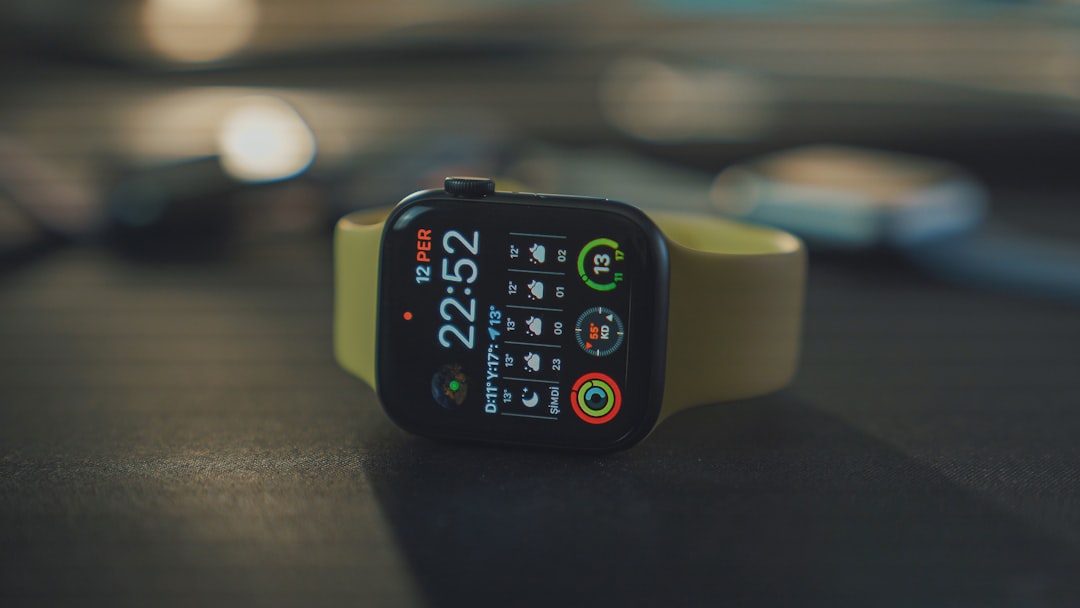
If you’re already wearing a fitness tracker — and after my experience testing budget smartwatches earlier this season, I’m a firm believer that most people benefit from one — a smart scale fills in the gaps that wrist-based tracking simply can’t measure. Your watch counts steps and estimates calorie burn. Your scale tells you whether that burn is actually changing your body composition. They’re complementary, not competing.
I’ve also found that the daily weigh-in habit pairs well with other morning health routines. After installing a walking pad under my desk and adding an air purifier to my office, the scale became the third pillar of a workspace setup that actually supports my physical wellbeing instead of degrading it. The data shows up in Apple Health alongside my step count, heart rate, and sleep data, giving me a more complete picture than any single device could provide alone.
If you want to explore the broader health-tracking ecosystem, our colleagues over at Health Omnux have been diving into screenless wearables and finger-based health tracking, which is another angle entirely — less about metrics, more about recovery and readiness.
The Verdict After Standing on Seven Scales for Three Months
Here’s my honest bottom line after this experiment: almost any smart scale is better than no smart scale. Even the cheapest one I tested — the RENPHO Elis 1 at $22 — gave me actionable trend data that a regular bathroom scale simply can’t provide. The question isn’t whether to get one. It’s which tier makes sense for your goals and budget.

For most people reading this, the Wyze Scale X is the answer. It’s accurate enough, the app is excellent, the build quality inspires confidence, and at under $40, it’s the least regrettable purchase you’ll make this year. If you want clinical-grade consumer accuracy and the best software ecosystem in the business, spend the extra money on the Withings Body Comp. And if you’re on a strict budget or buying for a family member who’s just starting their fitness journey, the RENPHO Elis 1 will give them everything they need to start paying attention to the metrics that matter.
The most important thing, though, is to connect your scale to a health app you already use — Apple Health, Google Fit, Samsung Health, whatever — and actually look at the trends once a week. A smart scale that you step on once and forget about is just an expensive regular scale. The magic happens when you let the data accumulate and start seeing patterns you’d never notice from day-to-day fluctuations.
Weight is a single number. Body composition is a story. After 25 years of testing technology, I can tell you that this particular gadget — this $25-to-$150 rectangle of glass and electrodes sitting in your bathroom — is one of the highest-value health investments you can make. Not because any single reading is perfectly accurate. But because 90 days of readings will tell you something no doctor’s visit, no fitness tracker, and no mirror ever could.