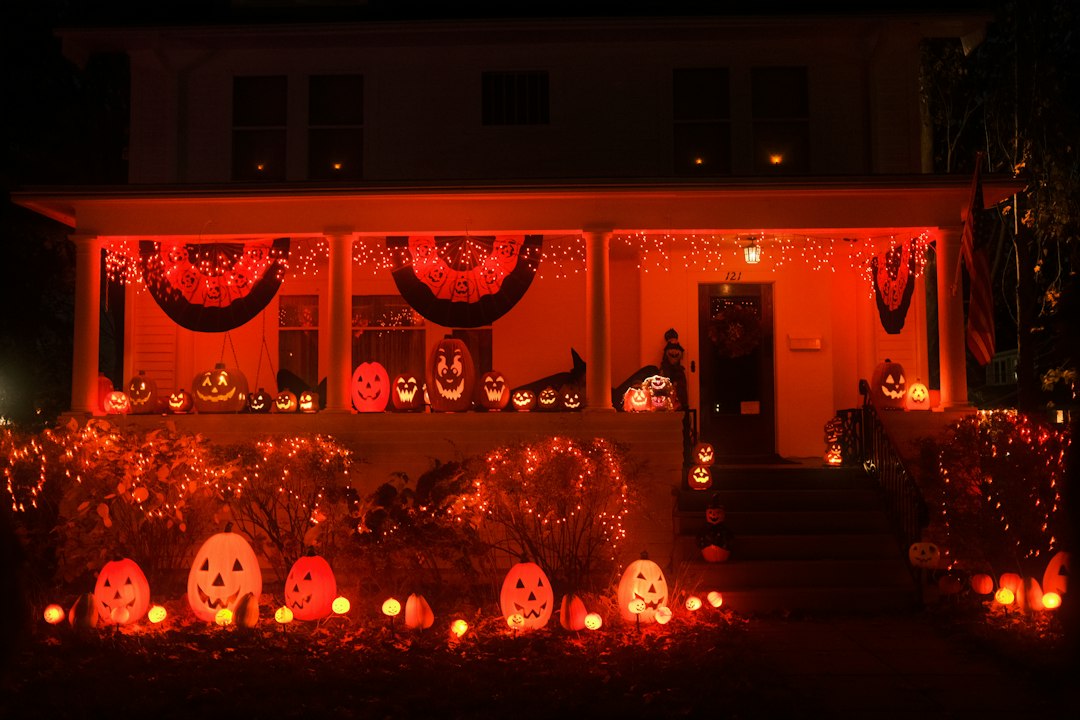
Every few years, the calendar hands you a gift. Halloween 2026 lands on a Saturday — the first time that’s happened since 2020 — which means the trick-or-treat window stretches later, the parties run past midnight, and every house on the block is competing for attention at full darkness. My street takes this holiday embarrassingly seriously. Last year, the guy four doors down ran a full projection-mapped garage and a fog rollout that would pass muster at a theme park. I refuse to lose twice.
But I review gadgets for a living, so my counterattack isn’t more extension cords and duct tape. It’s a front-yard haunt that mostly runs itself: lights that shift scenes on a schedule, fog that fires on a timer, a window that plays cinematic effects on loop, and a doorbell that handles the rush while I’m elbow-deep in candy allocation. Everything below is gear I’ve either bought myself this season or run through the same testing grind I’d put any gadget through. Here’s the exact setup I’m deploying, what each piece costs, where the traps are, and what to skip entirely.
The Roofline Does Most of the Work
If you buy one thing for a smart Halloween, make it permanent outdoor lights. I ran Govee’s Permanent Outdoor Lights 2 along my gutter line back in June for exactly this reason — 150 feet of app-controlled RGBIC strands that mount once and then become whatever holiday you need. In October, that means a slow-cycling purple-and-orange wash, a flickering “haunted candle” scene, or a full lightning-strobe effect synced across the whole house. The 2nd-gen version added enough brightness that my house reads clearly from the end of the block at dusk.
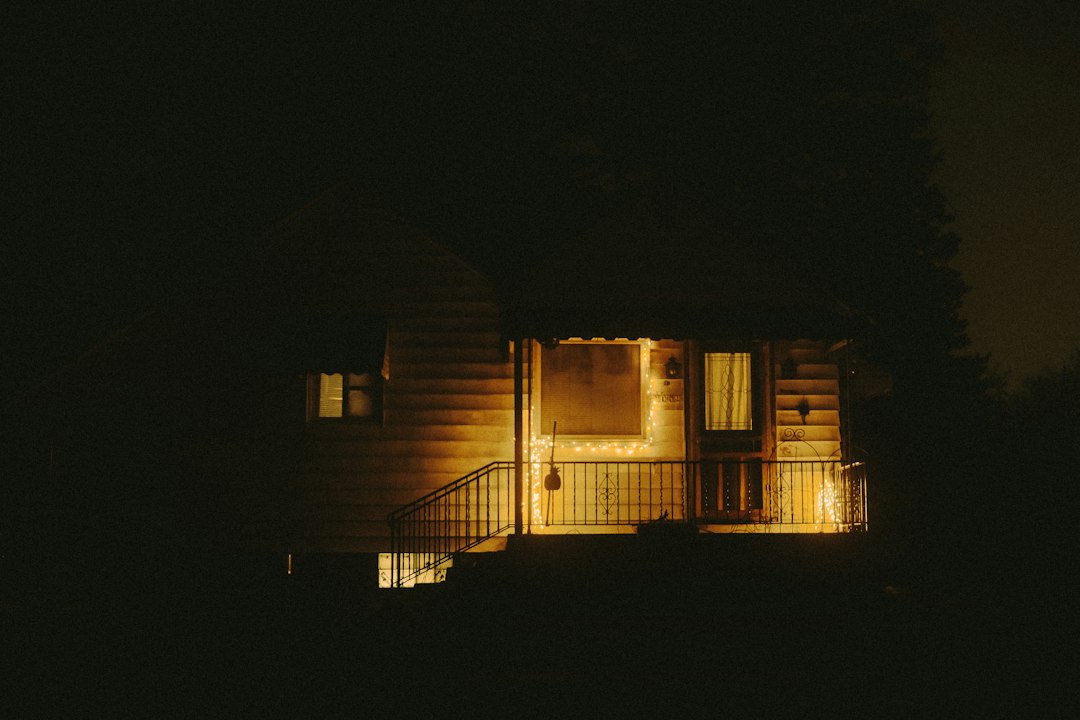
The scheduling is the part people undervalue. The lights come on automatically at 6:10 p.m. — about twenty minutes before it’s dark enough to notice them — and shift to a dim orange idle after 10 p.m. so I’m not the neighbor searing everyone’s retinas at midnight. On the night itself, I’ve got a saved “Grand Finale” scene that goes full strobe-purple for the last half hour. Nobody in my house touches a switch all month.
Installation is a one-afternoon job, and it’s the only part of this whole setup that needs a second person: one of us on the ladder, one on the ground feeding line and calling alignment. After that, the lights live there year-round — they’ve already paid for themselves across summer evenings and will do it again in December without me climbing anything.
Ground Fog, No Witchcraft Required
Fog is the single highest-impact-per-dollar effect in outdoor Halloween, and it works even better now that machines have gotten cheap. I’m running an 800-watt Dashsafe unit rated at 4,500 CFM, which is honestly more output than a residential yard needs. Set it behind the tombstones, point the output low across the grass, and let the fog crawl instead of billow — ground-hugging fog reads “graveyard,” while a vertical plume reads “malfunctioning appliance.”

Two things nobody tells you. First, the included juice is usually thin, watery stuff; a quart of high-density fog fluid hangs in the air nearly twice as long and is rated for machines exactly in this wattage range. Second, fog machines hate being power-cycled — they need three to five minutes of warm-up before their first blast. Which brings me to the gadget that quietly runs the whole operation.
One upgrade worth knowing about if you go down the rabbit hole: routing the fog through a cheap ice-chiller box before it hits the yard cools the vapor so it hugs the ground like movie fog instead of climbing into the trees. It’s a cooler, a dryer-duct elbow, and about fifteen minutes of cutting. My testing crew built one last weekend for under twenty dollars, and the difference is genuinely theatrical.
The Window That Plays Movies
This is the effect that stops foot traffic: a bright projection playing animated ghosts and skeleton scenes inside a front-facing window. The content comes from AtmosFX digital decoration USB drives — nine looping effects in the Halloween pack, from ghostly apparitions to a rattling skeleton — and the hardware is a basic window projector kit with projection fabric. Hang the fabric inside the window frame, set the projector on a table six to eight feet back, and the window becomes a screen visible from the street.
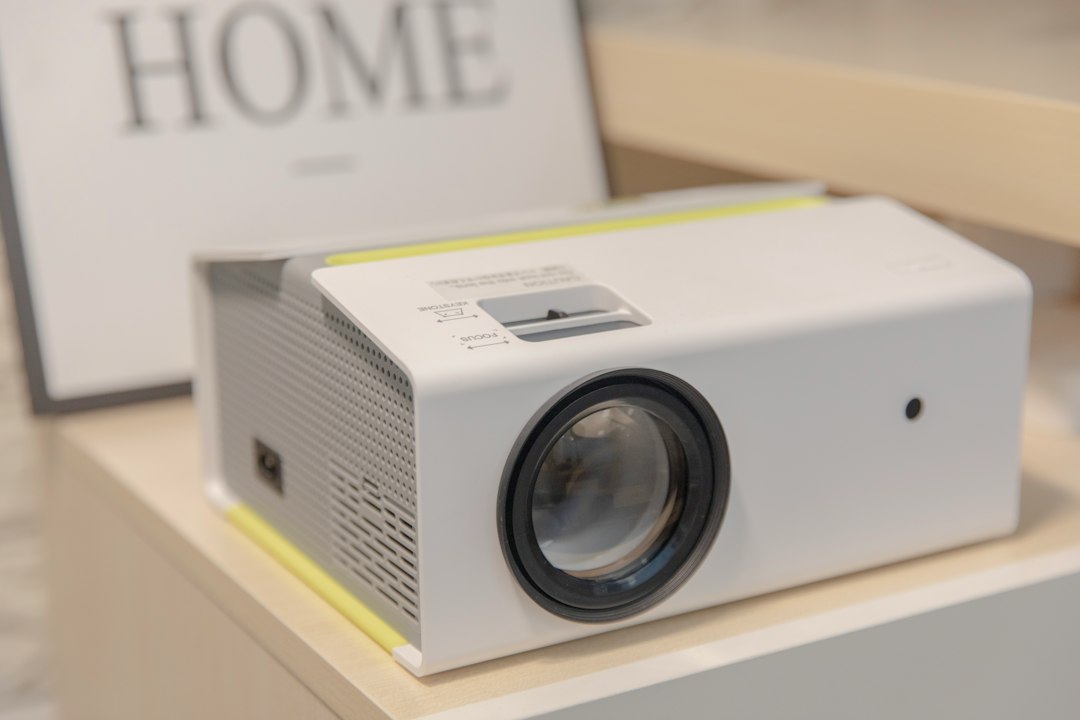
The trick is treating it like home cinema, not a toy. A dark room behind the projector, focus actually adjusted, and the loop volume low enough that it doesn’t become the neighborhood’s soundtrack. If you already own a decent portable projector — I wrote up the Freestyle+ I ran all summer for backyard movies — you only need the USB and the fabric, which brings the whole effect under forty bucks.
One $25 Outlet Runs Everything
The unglamorous backbone of the entire haunt is a weatherproof smart plug. The Kasa outdoor unit with two independently controlled sockets lives in a covered outlet by the porch and runs the fog machine and window projector. The fog machine gets a schedule that powers it at 5:50 p.m. — warm-up happens automatically, so the first blast lands right at full dark — and cycles off at 9:30. The projector runs a simple dusk-to-11 p.m. window.
This is the same trick I documented in my connected-home blueprint, just pointed at spookier goals: anything with a dumb power cord becomes a scheduled, app-controllable effect. Two sockets is the right number — one for the “always on during show hours” gear and one for the effect you want to trigger manually when a crowd gathers. My brother-in-law mans the manual trigger on big nights; it’s the only job in the whole setup that requires a human.
Trick-or-Treat Night Runs on the Doorbell
The Saturday crowds are the whole ballgame. When forty kids hit your porch in ten minutes, you want eyes on the walkway, not a pile of candy you’re guarding blind. The Eufy E340 video doorbell does dual-camera 2K with package-and-person detection and stores footage locally — no monthly fee, which matters if you’ve read my piece on escaping the security-cam subscription trap. On Halloween it’s a crowd-management tool: I can see the group coming up the driveway from the kitchen and have bowls ready before the doorbell rings.

If you want to go further on access control, motion-activated porch lights and a smart lock handle the rest — though after three months with a face-reading lock, I’ll warn you that handing out candy with your arms full is a solved problem, not a tech problem.
The Graveyard Needs One Showstopper
Static tombstones are table stakes. What flips a yard from “decorated” to “destination” is one piece that moves when people least expect it. This year’s addition is a 5.9-foot motion-activated animatronic that lurches forward when someone crosses the path — the classic Haunted Hill Farm build. The lesson from testing these: placement beats size. Tuck it behind a visual break in the yard, half-shadowed, aimed at the return trip from the door rather than the approach. People relax on the way back to the sidewalk. That’s when it gets them.

One power note from experience: animatronics with speakers and servos want a real outlet, not a daisy chain of bargain power strips. Give it its own weatherproof socket, and test the trigger angle in daylight before the first crowd shows up.
Light the Path So Nobody Becomes a Prop
The least glamorous purchase is the one your homeowners insurance would insist on if it had a vote. A ten-pack of purple-and-orange pathway stake lights costs less than a pizza and turns your walkway from a lawsuit into a runway. Staked lights also do double duty as crowd-control — a lit lane keeps the thirty-kid herd from trampling the graveyard on their way to the door.
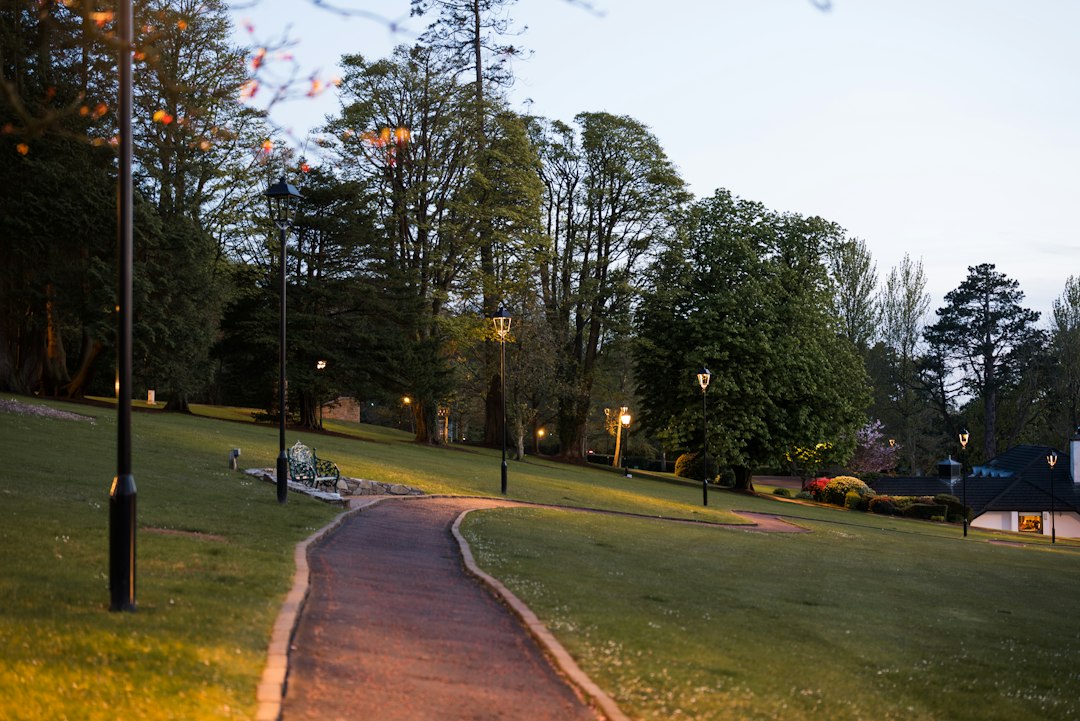
I run mine on the same dusk schedule as the roofline so the whole yard wakes up in one coordinated moment around 6:30. That single “the house turned on” beat, spread across every fixture at once, is worth more than any individual decoration.
What I’d Skip, and When to Buy
Not everything deserves a spot in the cart. Skip the cheap “hologram fan” spinners — they look great in vendor videos and mushy in real life, especially at any street-view distance. Skip Bluetooth-speaker “singing” light strings unless your yard is small; audio is the first thing neighbors retaliate against. And skip anything that needs a companion app you’ll never open again — a rule that serves me well all year, not just in October.
Timing matters more with Halloween than any other holiday except Christmas. The good animatronics sell out by early October — the big-box seasonal drops are picked over within days — and fog machines and outdoor lights go scarce the week before the weekend. Buying in late September, while everything is in stock at list price, is the difference between the yard you planned and the yard you settled for. Halloween on a Saturday means peak crowds and peak competition. My street has been warned.
The Whole Haunt, Priced Out
For the spreadsheet people — my people — here’s the damage. The permanent roofline lights are the big-ticket item at a few hundred dollars, but they’re a year-round purchase that happens to peak in October. The dedicated Halloween spend stacks up fast and stays sane: fog machine and fluid together run about seventy dollars, the window effect lands under forty if you already own any projector, the pathway stakes are around twenty-five, the smart plug is about thirty, and the animatronic is the splurge at roughly a hundred and thirty. Call it two hundred fifty to three hundred dollars of pure seasonal gear, most of which packs into one bin and redeploys next year in a single afternoon.
Compare that to a single professional haunted-house rental or one of those inflatable-heavy kits that look tired by year two, and the math tilts hard toward the smart setup. More importantly, every scheduled piece means the show runs whether I’m home, handing out candy, or hiding in the garage eating the good chocolate myself. That’s the entire philosophy of this site applied to a holiday: tech should work for you, not the other way around. Even when it’s wearing a skeleton costume.