
When Google euthanized the Coral USB Accelerator last year, I wrote about the workarounds my cameras fell back on — and I was honest about the ceiling. A Raspberry Pi with a Hailo stick can watch two, maybe three streams before it starts dropping frames like a bad phone call. My house runs six cameras, a voice pipeline, and increasingly a small language model that summarizes what happened while I was asleep. The Pi didn’t die, exactly. It just started breathing hard. So I did what I always do: I bought the cheapest serious computer NVIDIA sells, bolted it to a utility shelf, and gave my house the closest thing to a brain it’s ever had.
The computer is a Jetson Orin Nano Super Developer Kit. It costs $249, it’s the size of a small sandwich, and it was designed to be the brain of an actual robot. Mine has no robot. It has a shelf, a camera cable, and an Ethernet run — which, as it turns out, is the best $249 I’ve spent on this house since I stopped paying for cloud camera subscriptions.
What 67 TOPS Actually Buys You for $249
The headline number is 67 trillion operations per second — “TOPS,” in the industry’s preferred unit of vague. That’s nearly double the original Orin Nano, unlocked mostly through software: NVIDIA’s JetPack 6.2 “Super” mode squeezes real performance out of silicon that shipped in 2023. Under the heatsink there’s an Ampere-class GPU with 1,024 CUDA cores and 32 tensor cores, two dedicated deep-learning accelerators, six Arm CPU cores, and 8GB of LPDDR5 with about 102GB/s of memory bandwidth. That last number matters more than any TOPS figure — bandwidth is what decides whether a language model runs or crawls.
Here’s the part that separates it from every other small board I’ve tested: it runs real CUDA. Not a wrapper, not an API subset. The same software stack that powers a $2,000 desktop GPU card compiles and runs on this thing. When my team benchmarked it against the Pi-plus-accelerator setup, it wasn’t a comparison. It was a eulogy.
If you’d rather skip the parts-sourcing entirely, Yahboom sells a bundled version of the Orin Nano Super kit with a 256GB SSD, power supply, and Wi-Fi card included — you pay a premium over the bare NVIDIA kit, but everything works out of the box in about fifteen minutes.
The Build: Five Parts, One Afternoon
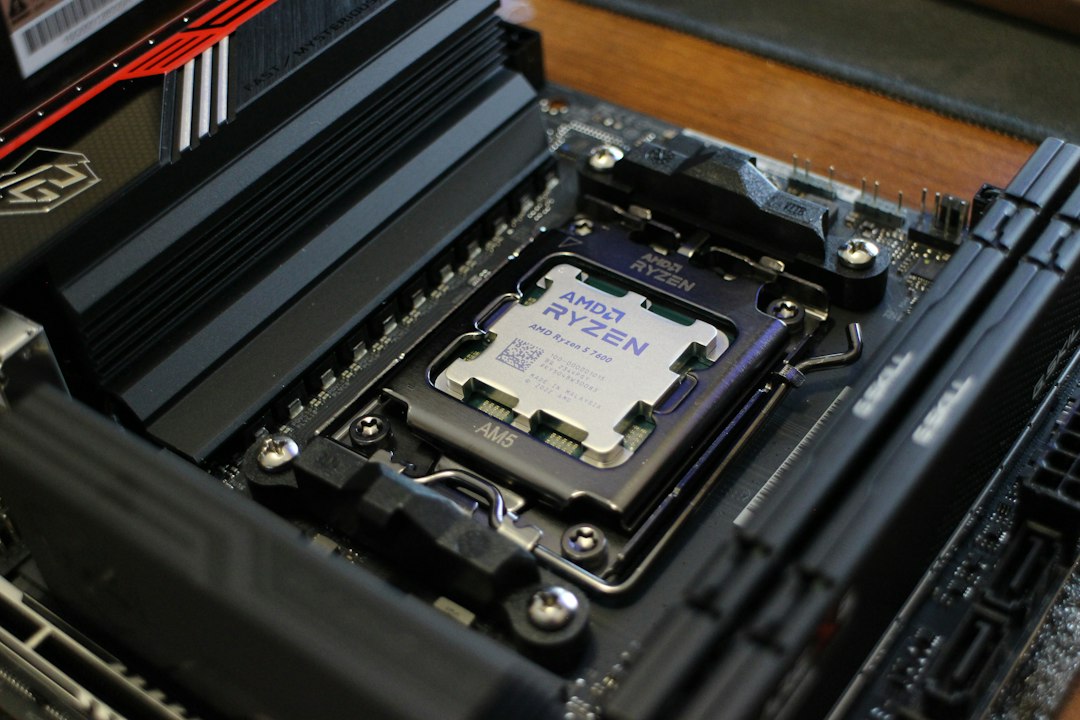
The shopping list is short. The kit itself, an M.2 2230 NVMe drive — I used a 1TB Crucial P310, which is overkill in the best way — and a case. The KKSB aluminum case built for the Orin Nano costs more than you’d expect a bent metal box to cost, but it turns the exposed dev board into something that doesn’t panic guests who see it on a shelf next to the network gear. Add the power supply in the box, one Ethernet cable, and a camera. I went with an Arducam 12MP HQ module for the CSI port, mostly to test whether the onboard camera pipeline was worth the hype. It is.
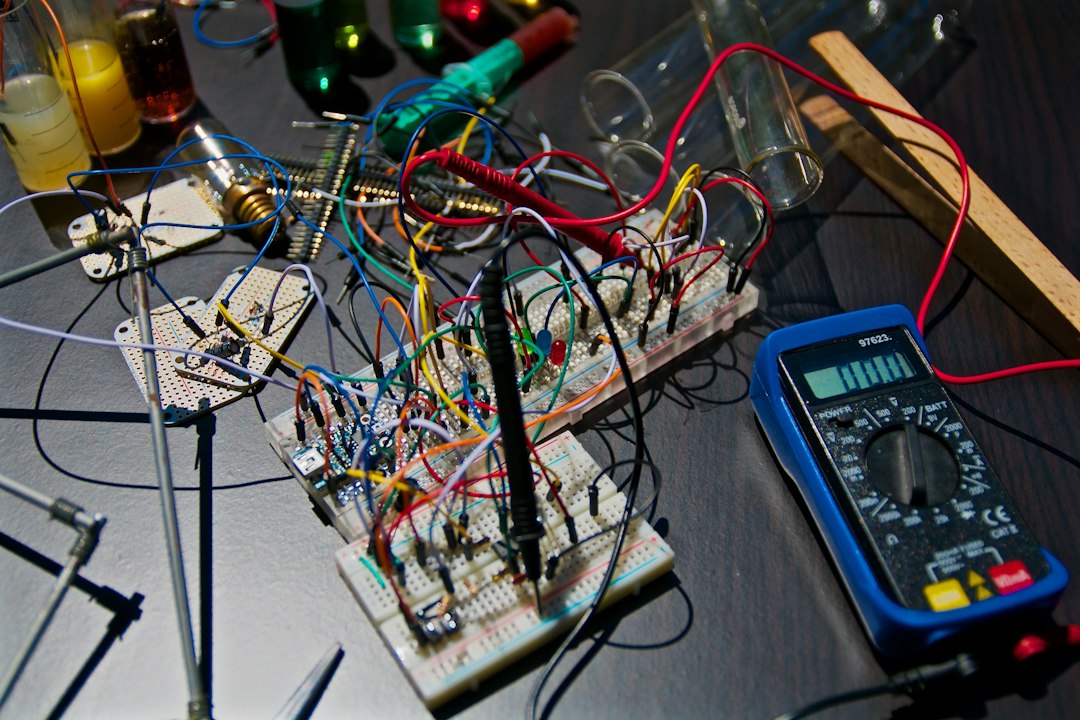
Assembly is a screwdriver and a standoff; flashing the OS to the NVMe drive is a single command from a host PC. The one honest friction point: no Wi-Fi on the bare board. For an always-on box you want wired Ethernet anyway, but budget ten minutes and a USB dongle or M.2 E-key card if your shelf isn’t near a switch.
The Eyes: Six Cameras, One Verdict Each
The Orin’s day job is running Frigate, the open-source NVR that turns dumb camera streams into labeled events: person at the side gate at 2:14 a.m., raccoon on the deck at 3, package on the porch at 9:40. Detection runs natively on the tensor cores. My team clocked end-to-end detection latency at roughly 30 to 40 milliseconds per frame across all six streams — fast enough that the pre-roll buffer catches the moment before motion starts instead of a tail light leaving the frame.
The upgrade over the Coral-era workarounds I documented last year isn’t just speed. It’s headroom. CPU sits under 20 percent with everything running, which means I could double the cameras and the box wouldn’t notice. When your detection box is bored, you start asking it to do other things. Which is exactly what happened.

The Ears: Whisper for Pennies a Month
Job two came from a conversation I’d had with my local voice assistant setup. Speech-to-text had been the weak link — cloud STT for accuracy, or a local model that transcribed like it had cotton in its ears. The Orin runs Whisper’s small and base models through faster-whisper with tensor-core acceleration, and it lands effectively real-time: speak a sentence, see it typed before you finish nodding. Wake-word detection happens upstream on a cheap mic board, the transcription happens here, and no audio ever leaves the LAN.
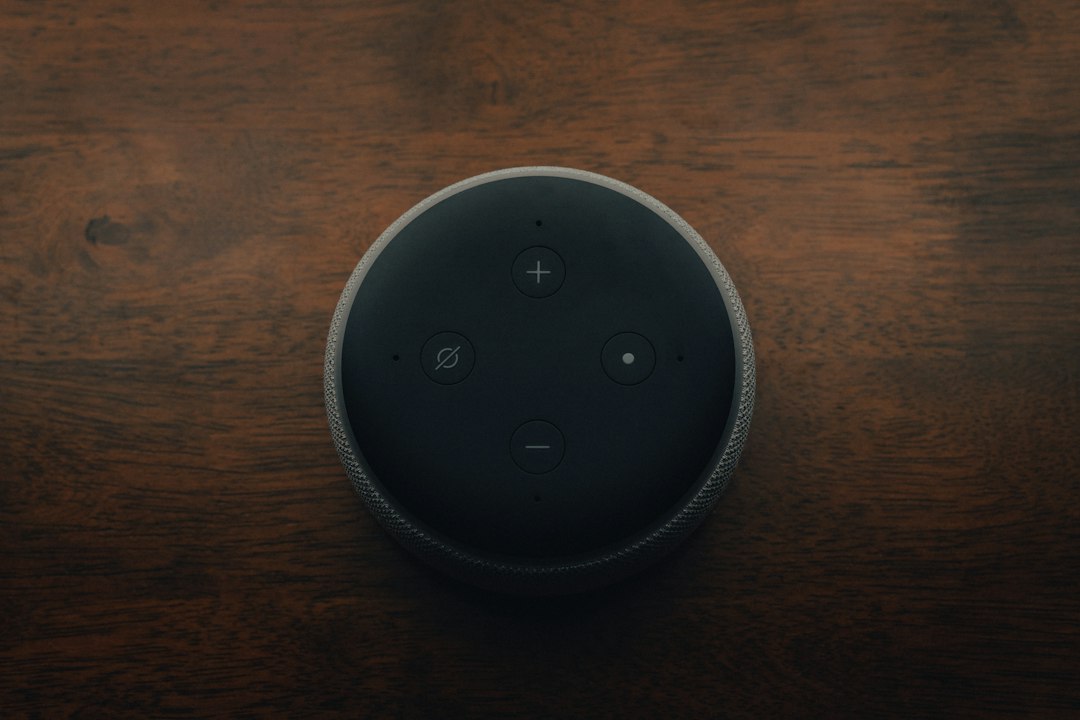
If you’re building the same stack, a multi-microphone array board cleans up far-field pickup dramatically — my kitchen commands went from 80 percent understood to basically always. And if you’d rather not solder together a voice pipeline at all, plug the whole thing into a Home Assistant Green hub and let it be the friendly front-end while the Jetson does the listening. It’s the same division of labor I liked when I fired Alexa from this house, just with a better-trained intern doing the transcription.
The Small Brain That Knows Its Place
Job three is the one that gets eyebrows up: it runs a language model. A quantized 3-billion-parameter model — Llama 3.2 in my case — pushes roughly 14 tokens per second on this hardware. That is not fast by chatbot standards, but it’s plenty for what a house actually needs: “summarize the 14 motion events from last night in two sentences,” “draft a reminder about the sump pump alert,” “was that delivery person the same one from Tuesday?” The model reads my camera event log every morning and hands me a three-line brief before I’ve found the coffee. After six weeks, I read it before I read anything else.

Let me be equally clear about what it can’t do, because honesty is the whole brand here. It will not run the 70B-class models that make local-AI evangelists smug — for that you still want the mini-PC-with-big-unified-memory route I tested earlier this year. It won’t hold a candle to the filing-cabinet RAG rig my team built for serious document search. What it does is take the thousand tiny judgment calls a smart home makes daily and handle them locally, instantly, and without an API key. The $249 tier and the $3,000 tier are different tools, and confusing them is how people end up disappointed.
The Power Bill Is the Whole Point
Here’s the math that made me a believer. At the 15-watt power mode — where mine lives permanently — the Orin draws 10.8 kilowatt-hours a month. At thirteen cents a kWh, that’s about $1.40. The desktop GPU rig it replaced idled at 180 watts and spiked past 300; call it $20 a month to do the same jobs, with a fan you can hear through a wall. Even the excellent Mac mini server that runs my file life — a machine I still love — costs more upfront by an order of magnitude if all you need is this particular job description.
Fourteen dollars a year for house-scale AI. The subscription drawer in my office used to collect that much per week. When people ask me why I’m evangelical about edge boxes, that’s the whole sermon: intelligence you pay for once, instead of forever.
The Ladder: From $99 HAT to a $3,499 Humanoid Brain
The Jetson line is a ladder now, and it’s worth knowing where each rung sits. At the bottom, the new Raspberry Pi AI HAT+ with a 40-TOPS Hailo accelerator handles a camera or two and light vision tasks for around a hundred bucks — no CUDA, but genuinely fine for a single-room setup. The Orin Nano Super at $249 is the value rung and the one I’d hand most people. Need 157 TOPS and 16GB for a heavier fleet? The Orin NX Super kits step up to full self-hosted model serving. At the top sits Jetson Thor, NVIDIA’s $3,499 humanoid-robot computer — a Blackwell GPU, 128GB of unified memory, and 2,070 FP4 teraflops in a 130-watt envelope. That’s roughly thirty times the compute of my shelf box, and it exists because actual robots — the walking, stocking, sorting kind — are shipping with it inside.
Thor is sold direct through NVIDIA and its partners, and I don’t recommend it for home automation any more than I’d recommend a cruise ship for a fishing trip. But the fact that the same software stack I use to watch my porch powers warehouse humanoids is exactly why this platform will still be maintained in five years. Buy into ecosystems that have bigger customers than you.

Should You Put One on Your Shelf?
If you own more than three cameras, or you’ve ever been annoyed that your “smart” home needs a datacenter round-trip to notice a person, the Orin Nano Super is the most sensible serious AI hardware you can buy right now. It’s cheap to acquire, absurdly cheap to run, and the software support is industrial-grade because robots with budgets depend on it.
Skip it if the words “flash an image to NVMe” made your eyes glaze over — for you, the plug-and-play Home Assistant Green covers 80 percent of the smarts with none of the terminal windows. And if your dream is chatting with 70B models at your desk, this isn’t that box. But as a cerebellum for a house that sees, hears, and briefly thinks — for $249 and $1.40 a month, nothing else I’ve tested comes close. The Pi’s still out there, breathing easy again, running the garden sensors. Everybody needs a job.