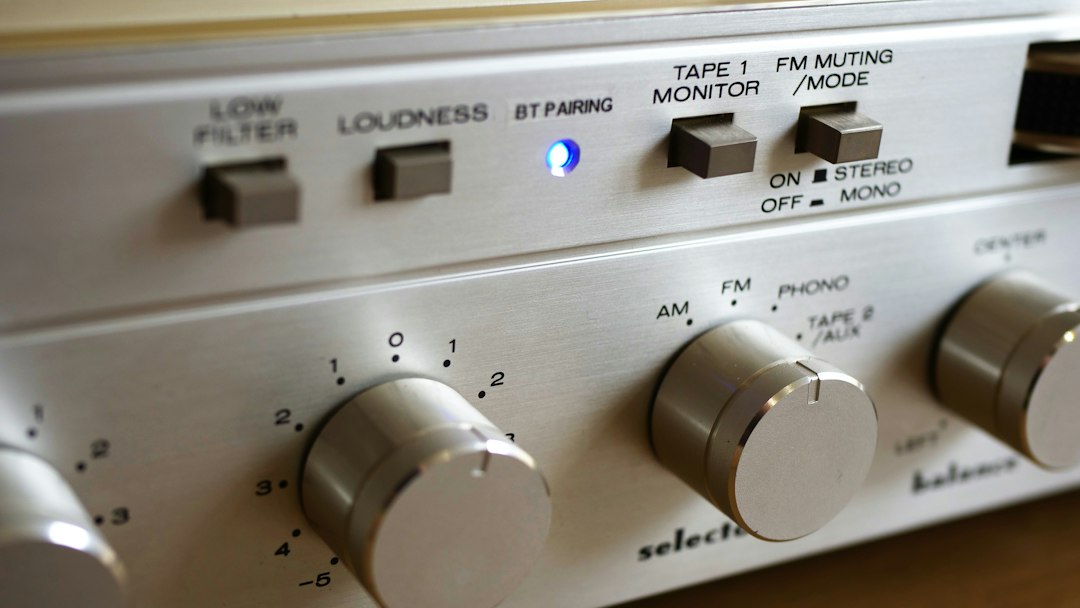
There’s a silver box that has lived on a shelf in my office since 2017. It has outlasted four phones, three laptops, two smart speakers that arrived with great fanfare and died quiet subscription deaths, and roughly every gadget trend this industry has cycled through since. It’s a Yamaha R-S202 stereo receiver — the $150 black-box legend that Reddit’s audio forums practically canonized — and for ten years Yamaha refused to touch it. No successor. No refresh. Just the same budget receiver, selling steady, collecting a decade of small complaints from people like me.
Last Thursday, Yamaha finally blinked. The R200A is here, it costs $299.95, it ships in November, and after spending the weekend with the spec sheet and a decade of my own notes, I can report something rare in this business: the company read the complaint file. All of it. Every line. Then built the fix.
The Receiver That Refused to Die
To understand why a $300 amplifier announcement is news at all, you need to understand what the R-S202 meant. When it launched in 2016, it was the answer to a question nobody else would answer: what’s the least money I can spend on a real, honest-to-goodness stereo amplifier that drives real speakers? Not a soundbar. Not a Bluetooth brick with a passive-radiator marketing department. A receiver, with an FM tuner and binding for actual passive loudspeakers, for about the price of mid-range earbuds.
The answer was roughly 100 watts per channel of clean, unremarkable, bulletproof amplification. My team has bought four of them over the years for various test benches and loaner setups. None has ever failed. One has been running near-daily in a workshop since 2019, caked in sawdust, and it still doesn’t so much as hum.
But the R-S202 earned its reputation despite a fixer-upper feature list. No phono input, in the middle of vinyl’s biggest revival since the format supposedly died. No subwoofer output, in an era when even purists admit a little 30Hz reinforcement helps bookshelf speakers. Spring-clip speaker terminals that belong on a 1990s boombox. Bluetooth only arrived with the R-S202D variant, and even then without anything fancy. The forums kept a running list. Yamaha, apparently, kept it too.
Every Complaint I Filed, Addressed
Start with the phono input, because it’s the headline. The R200A has a dedicated moving-magnet phono stage built in, which means you can plug a turntable straight into the receiver with no external preamp, no extra box, no extra cable, no extra $60 to $150 of accessory math. For a first hi-fi, that single input deletes an entire layer of setup anxiety. You buy the receiver, you buy a turntable, you connect them with the turntable’s included cable. Done.
Then the subwoofer output. This sounds like a bass-head indulgence until you live with small speakers for a while — a good pair of bookshelves does 95 percent of music beautifully and then goes completely silent below 60Hz, where kick drums and synth bass actually live. A sub out means you add a sub now or in two years, and the receiver is ready either way. The old R-S202 forced you into kludgy workarounds or no sub at all.
The rest of the list reads like a decade of forum posts turned into a requirements doc. Binding-post speaker terminals replace the spring clips. A/B speaker selection lets you run two pairs — bookshelves at the desk, outdoor speakers on the patio, one amp. Bluetooth 5.3 with Multipoint means your phone and your laptop stay connected simultaneously and the receiver just switches to whichever one starts playing. The AM/FM tuner survives with 40 presets. Power holds at 100 watts per channel into 8 ohms, which is plenty — more than plenty — for any speaker a first-time buyer is likely to own.
Under the lid, Yamaha claims enhanced grounding circuitry, a redesigned heat sink, and a new center-beam chassis that suppresses vibration. Marketing prose aside, the upgraded grounding is the one I’d take seriously; budget receivers historically let a little grime into the signal chain when the power supply is cost-engineered, and it’s the most plausible source of audible improvement here. The front panel is fully redesigned too — fewer, larger buttons, and the display moved down to the bottom edge. It looks, for the first time, like something designed this decade.
The $300 Question: Who Is This Actually For?
Here’s where I pump the brakes a little, because $299.95 is double what the R-S202 sold for at its street-price low, and the market around that price has changed completely since 2016.
If your music lives in streaming services and you have no turntable, no radio habit, and no nostalgia for physical media, don’t buy this. Buy a streaming amplifier instead — something like the Wiim Mini paired with whatever amp you already own, or Wiim’s integrated amps if you want the whole job done in one box. You’ll get app control, every streaming service under the sun, and room correction. The R200A gives you Bluetooth and a tuner. That’s a deliberate, almost political choice — this receiver is for people whose music has a physical form.
And if you’re building a home theater, this is the wrong tool entirely. Two channels, no HDMI, no surround. Yamaha’s own RX300A at $399.95 covers that world. The R200A is a stereo-only product in a market that has spent twenty years trying to convince you stereo doesn’t exist anymore.
That’s exactly why I like it. Vinyl sales have grown for something like seventeen straight years. CD players are creeping back. People are buying wired earbuds again for reasons that have nothing to do with convenience. The R200A is Yamaha building on-ramp infrastructure for that whole movement — one box that takes every kind of source you own, from a 1970s turntable to a 2026 phone, and just plays it.
The System I’d Build Around It
Since the R200A itself doesn’t land until November, I did what I always do: spec’d the complete first system around it, priced the whole stack, and checked what’s actually worth buying today. Call it a blueprint you can assemble while you wait.
The Turntable: Feed the Phono Input Properly
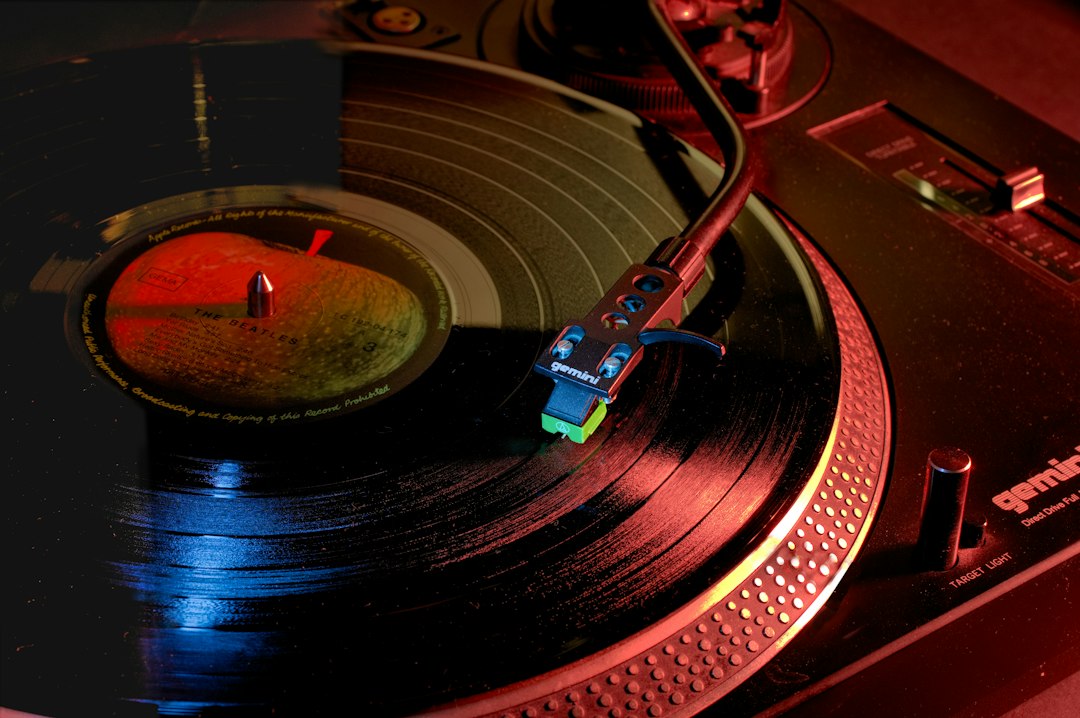
The phono stage deserves a real partner. The Audio-Technica AT-LP70X is my default recommendation — fully automatic (the arm drops and returns on its own, which matters more for enjoying records than anyone admits before their first skip), built-in moving-magnet cartridge, and a premounted headshell you can upgrade later. It outputs proper phono-level signal, so it plugs straight into the R200A’s dedicated input, or you can flip its internal switch and use it as a line source. Around $199, it’s the last turntable most people will ever need before the hobby gets expensive.
Buy a record cleaning kit in the same order. Used vinyl is half the point of the format, and half of used vinyl arrives filthy. A carbon-fiber brush, cleaning solution, and anti-static sleeve kit costs less than three new records and makes dollar-bin finds sound like first pressings.

The Speakers: Where the Money Should Go
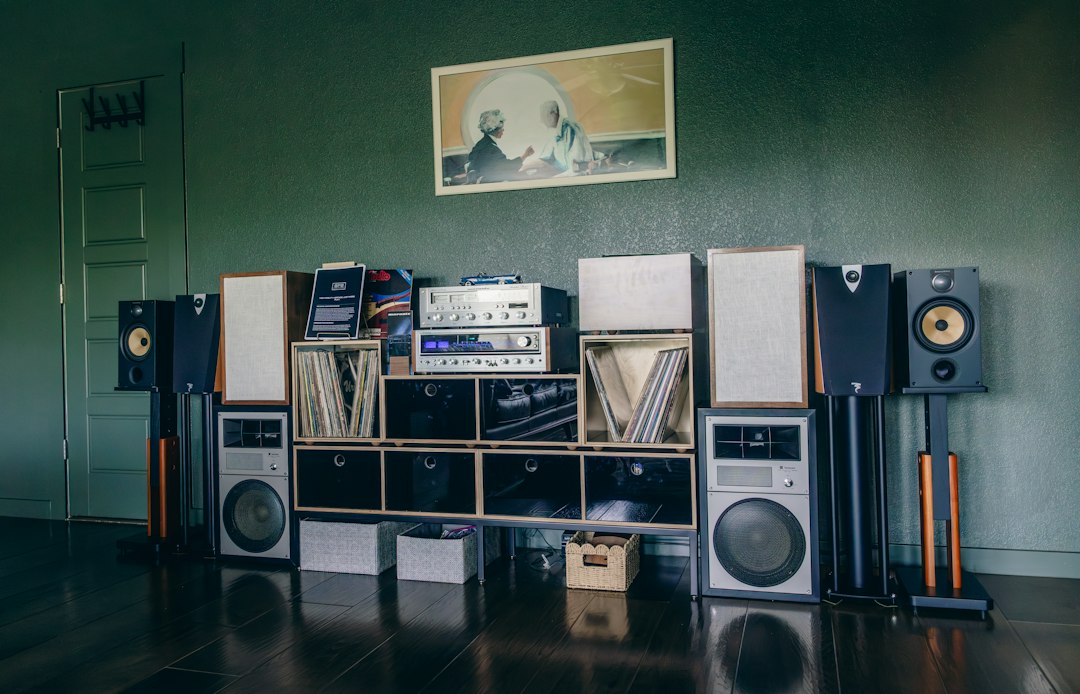
Here’s the rule I’ve landed on after twenty-five years of this: spend more on speakers than on the amplifier, always. The R200A’s 100 watts will happily drive anything in the starter tier, so put your budget where you’ll actually hear it.
The safe pick is the Sony SSCS5. Three-way design with a dedicated super-tweeter, a soundstage that embarrasses speakers twice the price, and a street price that dips near $130 when Amazon’s deals calendar cooperates. If you want a fuller, more forward presentation for rock and hip-hop, the Polk Signature Elite ES15 is the step-up — bigger cabinets, more bass before the subwoofer enters the conversation, and a warmer balance that forgives streaming compression.
The Subwoofer and the Wire: Finishing Moves
Remember that subwoofer output? Use it. The Polk HTS 10 is the match I’d make — a 10-inch powered sub with a long-throw driver that turns a bookshelf system into something that handles electronic music and film scores without breaking a sweat. Run it at half gain and let it fill in the bottom octave; the bookshelves above 60Hz won’t even know it’s there until you switch it off.
And please, do not connect any of this with the hair-thin wire that sometimes ships in the box. A 100-foot spool of 16-gauge speaker wire costs about the same as lunch and a set of screw-down banana plugs makes the binding posts on the R200A — the nice new ones, remember — genuinely satisfying to use. Ten minutes with a wire stripper and your connections will be cleaner than half the installs I see at audio meets.
Timing the Buy: Big Deal Days Before the Box Arrives

There’s a scheduling accident here that works beautifully in your favor. The R200A ships in November, but Amazon’s Big Deal Days runs October 6 and 7 — and audio gear is reliably one of the deepest-discounted categories at these events. Speakers, turntables, subwoofers, and accessories all tend to hit their lowest prices of the fall window.
So the play is simple: start a 30-day Prime trial before Tuesday, grab the speakers, turntable, and wire while they’re event-priced, and let the receiver land in November into a system that’s already half-built. Prime members also get the faster shipping on launch-window stock, which matters when a popular $300 receiver meets its first holiday season. Total damage for the full stack — receiver, turntable, SSCS5s, HTS 10, wire and plugs — lands around $1,000 if you catch the deals, and that’s a system that will still be playing in 2040. My R-S202 bench unit is the proof of the species’ lifespan.
If you’d rather not wait for November at all, closeout R-S202D units are still floating around at discounted prices — same bulletproof amp, Bluetooth added, but no phono input and no sub out. It’s a fine lifeboat purchase for a garage or workshop system. For the main listening room, I’d hold out for the new one.
Who Should Skip It

Streamers, again — the Wiim route is genuinely better if your library is entirely in the cloud. Home theater builders need HDMI and surround, full stop. And if you already own a receiver you like, the R200A isn’t an upgrade path; it’s an entry point. Nobody with a working amplifier should chase this for the chassis redesign alone.
There’s also the question I always get from readers who’ve been living on smart speakers: will a receiver like this sound $300-plus better than the puck on the shelf? Through real speakers, yes, and it’s not subtle — a pair of bookshelves with honest amplification does the one thing no smart speaker physically can: it puts the music in the room instead of pointing it at you. That difference is the entire hobby.
The Verdict: A Decade of Patience, Rewarded
Companies rarely get to fix a ten-year-old complaint list in a single product cycle, and rarer still do they do it without doubling the price into nonsense territory. At $299.95, the R200A is exactly what the entry level of hi-fi needed: a clean slate with the phono input, sub out, and connection quality the format revival has demanded for years, wrapped in the same don’t-die engineering that made its predecessor a legend.
My preorder’s in. The silver box from 2017 stays on the workshop shelf — it’s earned the tenure — but the listening room is getting its successor. Yamaha took ten years to make this move. Based on the spec sheet, they spent nine of them listening.