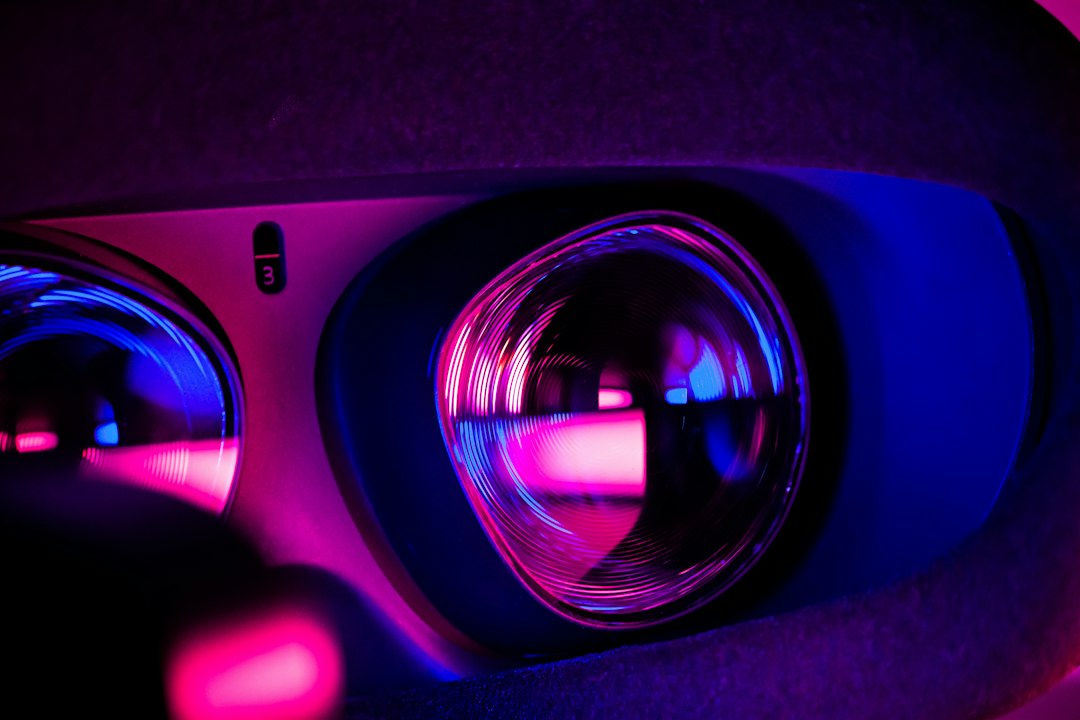
Somewhere around minute forty of yesterday’s Connect keynote, my notebook stopped being a list of announcements and became a scorecard. My team and I have been tracking the leaks on this one for months — we even put our predictions in print last week — so when Mark Zuckerberg finally took the stage in Menlo Park at 4 PM Pacific, I had two columns ready: what the reporting promised, and what Meta actually delivered. One rumor landed so precisely it felt choreographed. Another got blown out of the water by $300. And an entire product line that built this company’s hardware business never came up at all.
Here’s the full rundown, price by price, with my honest read on who each announcement is actually for.
The Camera-Free Glasses Are Real: Ray-Ban Meta Audio, $349
The worst-kept secret in wearables turned out to be exactly what we expected. The glasses that leaked for months under the codename Luna shipped yesterday as Ray-Ban Meta Audio, and the name tells you the whole story: no camera, just audio. Six microphones, open-ear speakers, and Meta’s Muse assistant doing the AI lifting instead of a lens. They start at $349, weigh a genuinely svelte 43 grams, and Meta claims up to 12 hours of playback per charge — 48 hours if you keep them cycling through the case.
Preorders are open now, shipping October 13, in the Clubmaster and Burbank frame styles the leaks named. If you’ve been put off by the surveillance optics of camera glasses — and you’re not alone, it’s the single most common complaint in my inbox — this is Meta building you an on-ramp. It’s also the lightest pair in the lineup, because stripping out the camera strips out the bulk.

I called this pivot inevitable last week when I looked at why Meta had no choice but to sell glasses without cameras, and I’m glad to see the pricing didn’t get punished for it. At $349, it undercuts the camera-equipped Gen 2 by fifty bucks while outlasting it on battery. If you want something similar on your face today, before October 13 rolls around, the Carrera Alexa audio glasses handle voice-assistant duties camera-free right now — or browse the current camera-free audio glasses on Amazon to see how thin that market still is.
Gen 3 Doubles Down on the Camera Instead
While the Audio model sheds the lens, the flagship Ray-Ban Meta Gen 3 at $449 leans into it. The 12-megapixel camera stays, now shooting 3K video with Dolby Atmos audio. Battery life climbs to a claimed nine hours of mixed use, there’s a new hardware action button, and the six-microphone array carries over for cleaner voice capture. It’s available immediately, $70 over the Gen 2 launch price — a bump my team attributes to the same memory and component cost spiral that’s driven gadget pricing all year.
The quieter story is scale. Meta says it will offer more than 100 glasses styles by the end of the year, including the LISA Edition and a Kylie Jenner Ivory collection from $399, and the rollout is going global — Singapore, South Korea, Mexico, and the UAE come online now, with Brazil next. This is no longer a gadget. It’s an eyewear business.

That scale is exactly why I’d tell most people not to pay the Gen 3 premium yet. The Gen 2 Wayfarer with clear lenses and the Gen 2 Wayfarer with Transitions lenses are sitting on Amazon right now at prices that make the $449 ask look aggressive, and they still shoot 3K video with the same assistant. If the newest hardware matters to you, the Gen 3 listings will populate as stock lands. When I compared the three camps of smart glasses earlier this year for my smart glasses showdown, the lesson held: buy for the features you’ll use this quarter, not the version number on the box.
The Headset Formerly Known as Phoenix
Now the headline act. The ultralight headset tracked for two years as Puffin, then Loma, then Phoenix arrived with its actual name: Meta VR Glasses, at $1,299.99, going on sale in spring 2027. No preorders yet — just an email signup page.
The engineering story is legitimately remarkable. About 100 grams on your face — lighter than most sunglasses-and-case combos — with the processing shoved into a roughly 300-gram Snapdragon Reality Elite puck that rides on an optical tether, presumably pocketed or clipped. The displays are micro-OLED at 37 pixels per degree, which is squarely in premium-binocular territory. Input is hands and eyes, with 75-plus games playable via hand tracking at launch. Controllers exist but are sold separately. There are nose pads, as the firmware art foretold. Meta’s positioning is telling: a personal cinema first, a courtside sports seat second, a workspace third, a game console fourth. Disney+ 3D movies arrive in November 2027’s window with Lightstorm Vision 3D releases coming in 2027, IMAX Enhanced certification is on board, and more than 100 live sports events per year are promised. Hologram calling built on the Codec Avatars research ships in apps from WhatsApp to Zoom.

I’ve spent enough late nights with headsets to know the puck trade is the right one. Every gram on your face compounds over a two-hour movie; every gram in your pocket does not. That’s the same physics that made me respect the external-battery designs in Samsung’s Galaxy Glasses approach — the industry has collectively realized your nose is not a shelf.
The Price Nobody Predicted
Here’s the miss. The Wall Street Journal reported this headset would land under $1,000. It landed at $1,299.99 — a 30 percent overshoot, in the direction chip and memory costs have been pushing every hardware maker all year. My team ran the same math when RAM prices spiked: you either eat the margin, gut the spec, or move the sticker. Meta moved the sticker.
What does $1,299.99 actually buy? A cinema. That’s the honest framing. If you’re the kind of person who already pays for IMAX screenings and a big OLED, a 100-gram personal theater with a 300-gram puck is a coherent purchase. What it doesn’t buy: controllers in the box, a release date tighter than “spring 2027,” or any Quest-ecosystem hand-me-down guarantee. If a giant virtual screen is the whole draw and spring 2027 is too far out, the XREAL One Pro glasses put a 171-inch virtual display on your face today for a fraction of the price — that’s the ceiling Meta is pricing against whether it admits it or not.

Courtside Seats and a Very Quiet Quest Story
The live sports commitment deserves its own paragraph because it might be the most under-discussed bet of the keynote. More than 100 live events a year, on a virtual scoreboard-size screen, from a device that fits in a jacket pocket. If Meta actually sustains that pipeline — and the rights negotiations behind it — the VR Glasses stop being a gadget and start being a season ticket that fits in a drawer.
What Meta did not say, though, is the loudest silence of the show: nothing on Quest. No price drop, no Quest 4, no bundle. The games segment led with Beat Saber: Flux, a hand-tracked entry landing spring 2027 — a launch title for the new glasses wearing a Quest franchise’s clothes. The reporting has Quest 4 no earlier than 2027, and after Meta closed three of its own studios this year, nobody should hold their breath. The installed base of Quest owners just watched the company’s attention walk across the street.

If you want standalone VR today, that makes the decision simpler, not harder. The Meta Quest 3S is the value play in the lineup and got no successor yesterday — nothing about its position changed except the certainty that it stays the recommendation through the holidays.
The Rest of the Show, Quickly
Three smaller items matter more than their airtime suggested. The Meta Adventurer, a $249 kid-focused glasses-and-plug-in-case setup, opens sales October 23 — Meta fishing for the family market with a durable, replaceable design rather than a shrunken flagship. The Ray-Ban Display finally went international: Canada at CA$1,149, the UK at £749, France, Italy, and Germany at €899, with orders live and availability October 13 — eight months after the first four-country pause. And hologram calling reaches Display owners in a US early access this fall. No new Display hardware, though. If you bought the $799 pair, your investment got software, not a sequel.
There was also the usual fashion-forward noise — the Kylie Jenner Ivory frames, the LISA Edition — which I read as cover for the real strategy: making “glasses with computers in them” look like eyewear catalog decisions rather than gadget purchases.

What I’d Actually Buy This Fall
Enough scorekeeping. Here’s the shopping list I’d hand a friend this morning. If you want camera glasses: Gen 2 at current pricing, not Gen 3 at $449 — the delta doesn’t buy you fifty dollars of experience yet. If you want the audio-only life: preorder the Meta Audio pair for October 13, or grab a camera-free alternative now. If you want VR: Quest 3S, full stop. And if you want a big virtual monitor instead of a headset, the display-glasses route is mature and cheap by comparison.
Whoever wins, the accessories are the same. My bench has scarred every smart glasses review unit with the same mistakes, so learn from us: a dedicated charging case solves the dead-glasses-in-your-pocket problem, a storage and accessories kit keeps lenses and cables in one place instead of loose in a bag, and a proper lens cleaning kit matters more on camera glasses than on any device you own — a smudge on a $449 camera you wear on your face is a smudge in every video you shoot.

Buy Now or Hold Your Money
The calendar is the cleanest guide here. October 13 brings the camera-free Audio glasses and the international Display rollout. October 23 brings the Adventurer for the kids. Spring 2027 brings the $1,299.99 VR Glasses — and realistically, the first reviews that tell us whether 100 grams plus a puck is living-room magic or a very expensive night at the movies. The Gen 3 camera glasses are the only “walk into a store today” hardware of the bunch.
My scorecard from the cheap seats: one rumor nailed to the letter, one price blown by 30 percent, one product line ghosted entirely. Meta’s glasses business has never looked more like a real eyewear company. Its headset business has never asked more of your wallet. And its VR faithful have never been asked to wait quite this patiently. See you in spring 2027 — I’ll be the one in row courtside, puck in pocket.