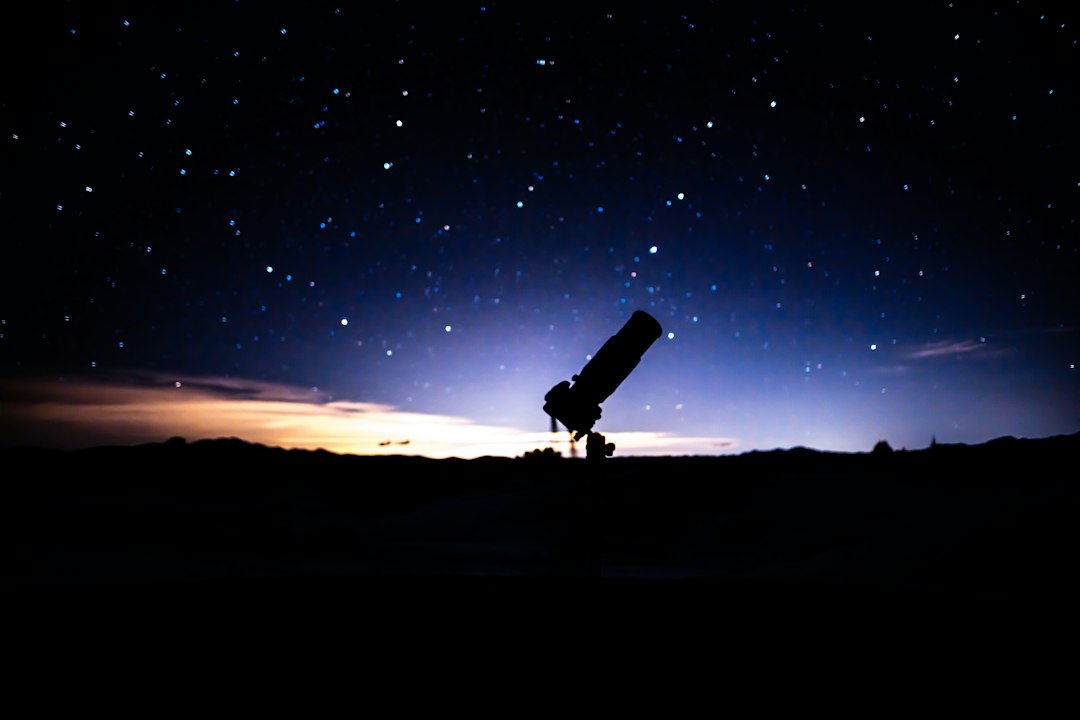
At 1:47 on a Tuesday morning, my phone buzzed: the Ring Nebula was ready. Forty minutes of exposure, stacked one ten-second frame at a time by a telescope sitting on my patio — alone, untended, under a sky with maybe eleven visible stars and the orange smear of a streetlight two houses down. I padded outside in slippers, looked at a perfect little smoke ring glowing green and rose on my screen, told the scope to move on to the Dumbbell, and went back to bed.
That paragraph would have gotten me laughed out of any astronomy club in 2015. The telescope that produced it has no eyepiece. You never look through it. And after six weeks of running these things every clear night my suburban sky allowed, I’ve come to a conclusion that still feels like heresy: the best telescope I’ve ever owned is the one I can’t look through.
Smart telescopes are the quiet story of 2026 — 20 to 30 percent annual growth since 2023, quietly eating the market that used to belong to $400 computerized GoTo mounts. If you’ve watched a neighbor set one up in the time it takes to open a lawn chair and walk away, you understand why.
A Telescope With No Eyepiece
Strip away the marketing and a smart telescope is five products fused into one tube: a small refractor, a motorized alt-azimuth mount, a dedicated astronomy camera, an electronic filter wheel, and the computer that makes it all cooperate. The original Seestar S50 packed all of it, dew heater included, into 2.5 kilograms. There is nothing to align, no polaris to find, no star chart to squint at. You set the tube down roughly level, tap a target in the app, and the motors plate-solve the sky themselves — photographing star fields and matching them against a catalog until it knows exactly where it’s pointing.
The purists hate this, and they have a point. It is not a telescope in the Galileo sense; it’s a robotic observatory with a phone for a control panel. Nothing in the experience involves your eye. But that’s precisely why it works for the 95 percent of us who live under light-polluted skies, have twenty free minutes instead of four free hours, and abandoned hobby astronomy the first time a Dobsonian needed collimating. The gear stopped being the hobby. The sky became the hobby.
The other half of the trick is live stacking. Each exposure is short — ten or fifteen seconds — and hopelessly washed out by city glow on its own. The software registers and stacks them in real time, subtracting the sky glow, keeping the signal. The picture of that nebula doesn’t exist in any single frame; it emerges, frame by frame, like a photograph developing in a tray. My first M27 of the season was a gray smudge at minute two. By minute forty it had structure. Nobody within three miles of me could see it with any telescope ever made, eyepiece or otherwise — and I was photographing it from a patio lit by my neighbor’s floodlight.

What Six Weeks on My Patio Taught Me
We ran three units through the same six weeks — same patio, same Bortle 8 sky, same targets — to see where the money actually goes in this category. The short version: aperture is everything, and the price ladder is steeper than it looks.
The shock of the test was the DwarfLab Dwarf Mini, a 1.85-pound tube that launched this past April at $399. It is barely bigger than a water bottle, fits in a jacket pocket, and still pulls recognizable nebulae from my terrible sky. It is the one I hand to kids, the one that travels, the one I don’t baby. If the question is “is this hobby for me,” this answers it for the price of a nice dinner out. The Seestar S30 sits at the same $399 and takes a friendlier software path — ZWO’s catalog and community are the deepest in the category, which matters more than any spec sheet when you’re three clicks deep in a menu at midnight.
The middle of the ladder belongs to the camera-brained. The Dwarf 3 is less a telescope than an astro-camera with a lens on the front — 35mm of aperture, a built-in filter wheel, and an interface that behaves like a camera app because DwarfLab expects you to think in exposures. If you come from photography, it will feel native. If you come from stargazing, it will feel sideways.
Then there’s the one that justified this whole exercise. ZWO launched the Seestar S50 Pro on August 25 — $899 at launch, $999 going forward — and it’s the first smart scope I’ve used where I stopped making excuses for the category. Fifty millimeters of aperture through a proper four-element apochromatic optic, 260mm focal length at f/5.2, and a new 1/1.2-inch sensor feeding a 4K dual-camera system that frames and focuses itself. On galaxies — traditionally the category’s weak spot, faint things that punish small apertures — it gathered in thirty minutes what the little tubes couldn’t gather in two hours. That’s not software cleverness. That’s glass and sensor area, the same physics that has always ruled astronomy, finally arriving at a suburban price.
And hovering above all of it, the one to watch: DwarfLab’s Draco, a 90mm monster that launched in September at $1,399 — the largest aperture of any smart telescope under $2,000, with an equatorial mode and 300-second exposures. Early December shipping. I have a deposit down, and I’d still tell most people to wait for winter reviews before joining me.
The Sun Is the Sleeper Feature
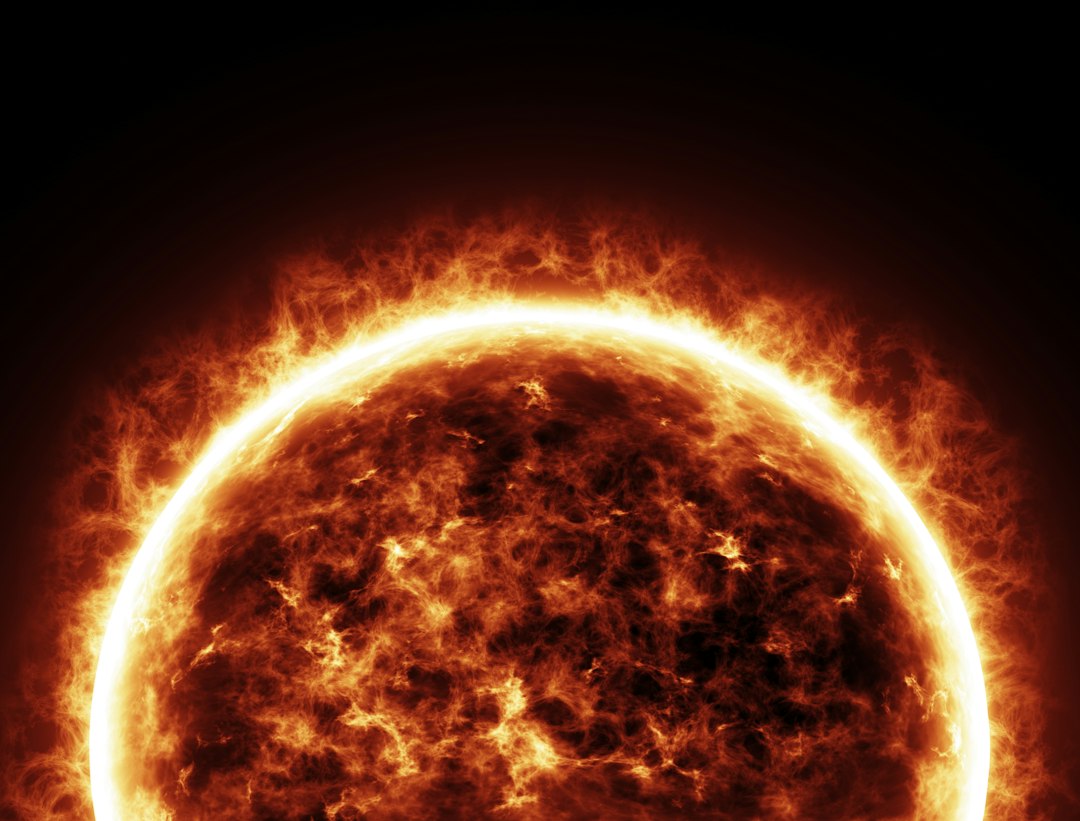
Nobody buys these for the sun, which is a mistake, because the sun is the most reliable target in the solar system. Flip a software switch and the motorized filter wheel slides its solar filter into place — no fumbling with glass sheets over the front of the tube, no “did I seat the filter” anxiety that keeps sensible people from ever pointing anything at the sun. What you get is white-light detail: sunspot groups, limb darkening, the slow boil of granulation. I’ve spent more lunch hours with the sun this fall than midnight hours with nebulae, and it’s the part my neighbors understand instantly.
It also solves smart-scope astronomy’s honesty problem. These machines need clear skies but not dark skies — that’s their superpower — yet they still need some sky. The sun doesn’t care about clouds-thirty-miles-away or a 3 a.m. rise time. Every daytime session is a session. For a gadget category, that round-the-clock utility is rare.
Where They Still Fall Short
Honesty time, because every smart-scope review that doesn’t include this section is an ad. Planets disappoint. The apertures are small and the focal lengths are short, which means Jupiter is a disc with two visible bands and Saturn is a tiny oval that has, tragically, lost its rings at this scale. If your mental image of astronomy is Saturn’s rings filling the eyepiece, no smart telescope delivers that — a classic 6- or 8-inch Dobsonian does, for less money, with the trade that you must learn to find things yourself.
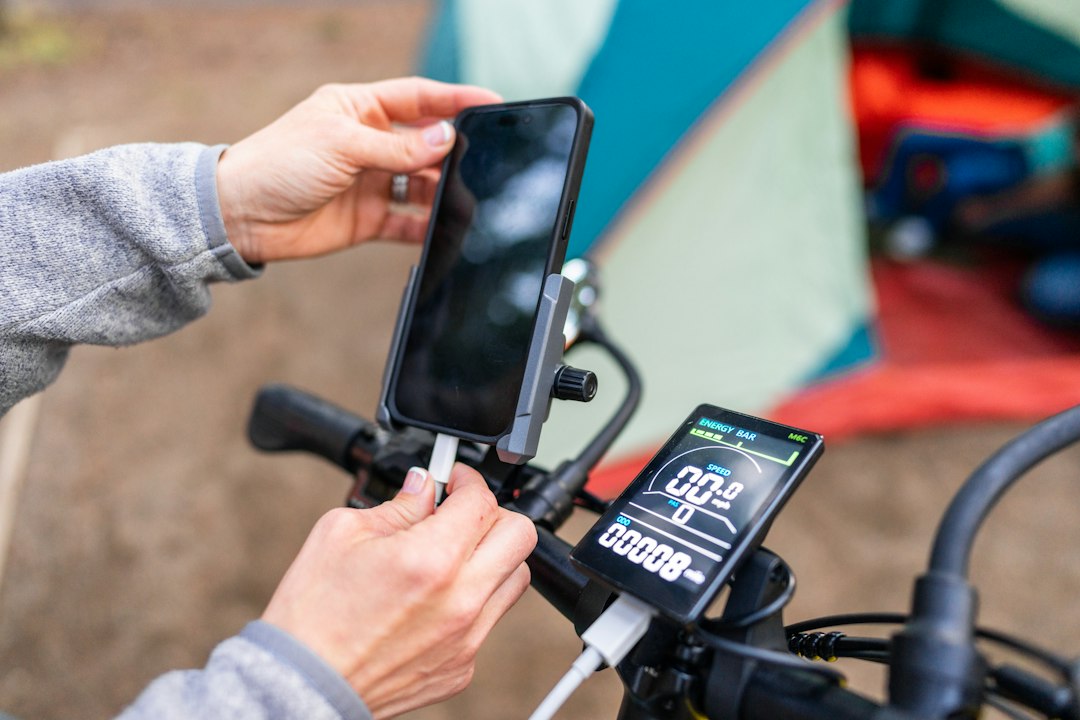
Cold murders the internal batteries. Below about 40 degrees Fahrenheit, expect a fraction of the rated runtime; I run everything off a 20,000mAh Anker power bank through USB-C from September onward, which turns a two-hour session from optimistic into routine. Dew will end your night before boredom does — the Seestars carry a built-in dew heater, the Dwarfs don’t, and a $15 red-light flashlight doubles as gear-check light that doesn’t wreck your dark adaptation while you’re wiping down the corrector.
And the sessions ask for patience of a specific kind. Targets need twenty to forty minutes to build. This is photography patience, not browsing. The first week I kept interrupting targets out of restlessness and my images looked like it.
The last gap is the eyepiece moment itself. Somewhere in your first month you’ll want to see something with your own eye, not your phone’s. That’s why every kit I assemble now includes real binoculars — a $45 pair of Celestron Cometron 7x50s for the wide view of the Milky Way’s glow, or the SkyMaster 15x70s if you want to resolve globs and double stars. The scope photographs; the binoculars show. You’ll want both more than you expect.

The Small Purchases That Punch Above Their Weight
The category’s dirty secret is that the tube is two-thirds of the spend and the last third decides whether it gets used. A fast microSD card matters more than people assume — these cameras write continuously all session, and the SanDisk 128GB Extreme has taken everything six weeks of nightly writing threw at it without a hiccup. The power bank I mentioned. A folding table, a red flashlight, a lawn chair you don’t mind leaving outside at 2 a.m.
And one piece of software advice that’s free: pair whatever you buy with a backyard weather station or at least a sky-transparency forecast. Astronomy gear sits unused not because of clouds but because of thin clouds — the kind you don’t notice until you’re forty minutes into a nebula. I leaned on the three weather stations on my roof all six weeks; a good transparency forecast is worth more than another $500 of aperture.
If you’re wondering where the smart telescope sits among the other robot-gadgets that have earned shelf space here — the 249-gram camera drone that flies itself, the 3D printer that prints them — it’s the same bargain every one of them offers: the machine absorbs the skill barrier, and you keep the wonder. That’s the whole product.
So Which One, and When
Buy the Dwarf Mini if you’re curious or buying for a teenager; it’s the category’s price of admission. Buy the S30 if you want the safest software and the biggest community. Buy the Dwarf 3 if you think in f-stops. Buy the S50 Pro if you already know you’ll keep doing this — the aperture step is real and it’s the first smart scope I’d call a lifetime keeper rather than an entry point. Wait on the Draco unless you already know what 90mm means.
On timing: this category finally showed up in the big fall deal events last year, and Amazon’s Big Deal Days run October 6 and 7 this time around. If you’ve been eyeing a Prime membership anyway, the 30-day Prime trial conveniently covers the event window — worth doing before the scopes sell through, because the entry models went out of stock repeatedly last winter.
As for me, the S50 Pro stays on the patio through fall, sun permitting and frost notwithstanding. Last Tuesday it found the Ring Nebula while I found my slippers. The old telescope-owning me would have called that cheating. The current me has a folder full of nebulae and no interest in arguing.